

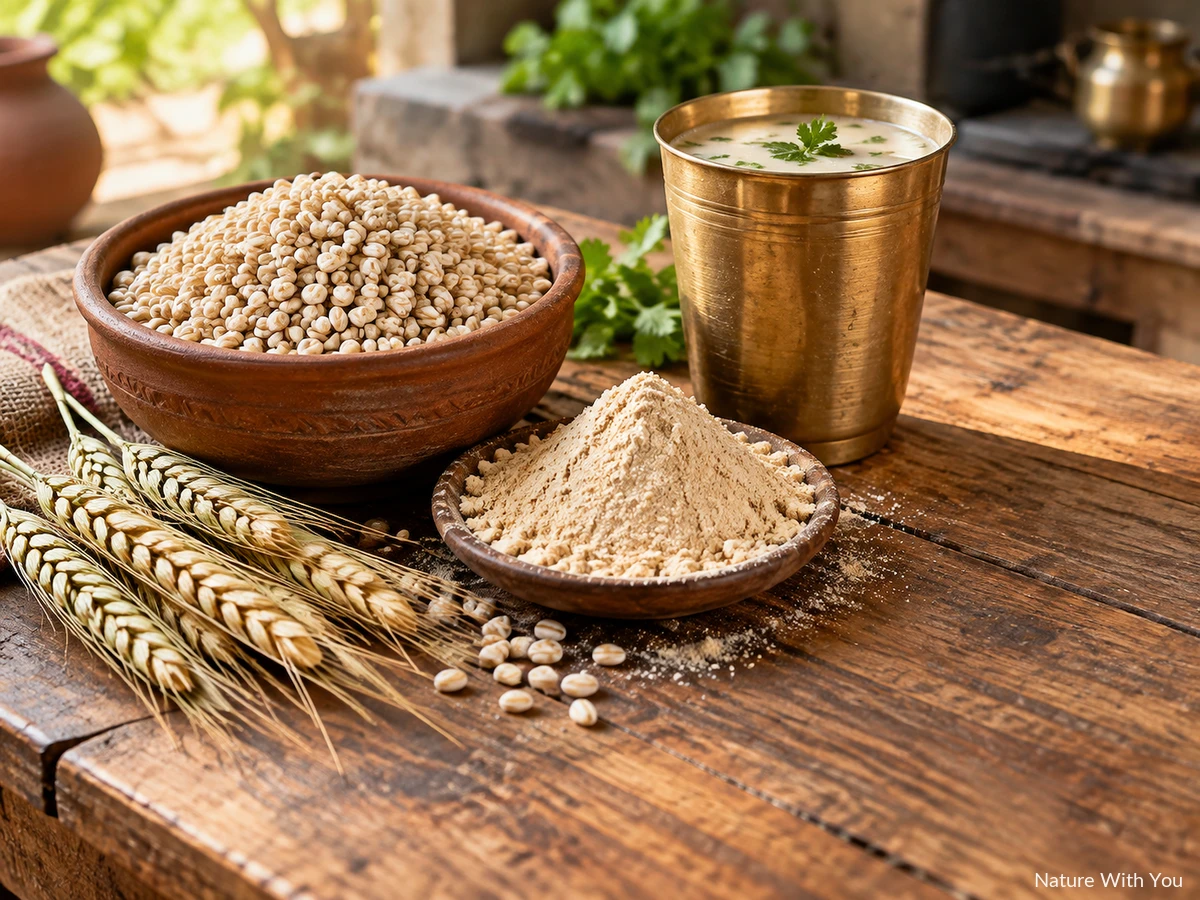
Barley (Jau) – Cooling Grain, Benefits & Jau Ka Sattu
Barley (Jau) in Ayurveda: the light, drying, cooling Yava that calms Kapha and Pitta. Nutrition, jau ka sattu, barley water and who should go easy on it.
Mon, Sep 28, 2026 · 5 min read🌾 Barley at a Glance
Barley, or Jau, is the grain the Vedas already knew — Yava appears in the oldest hymns, long before wheat became the everyday staple. Ayurveda values it for exactly the qualities that set it apart from wheat: it is light, dry and scraping, yet still cooling. That makes it the grain of choice when the body feels heavy, sluggish or overheated. In North Indian kitchens it survives as jau ka sattu, cooling barley water and the rustic jau-chana roti.
✨ Why It’s Special / Importance
- 🌿 A rare grain that is cooling and light at once
- 🥣 Whole barley is among the most fibre-rich grains, far ahead of rice and wheat
- ⚖️ Classically lekhana — it “scrapes” away excess Kapha and heaviness
- 🥤 The base of jau ka sattu and barley water, two old summer coolers
- 🏺 The grain Charaka returns to again and again in the Prameha diet
🏺 Traditional / Ayurvedic Uses
Rasa (Taste): Madhura–Kashaya (Sweet–Astringent) Virya (Potency): Sheeta (Cool) Vipaka (Post-digestive): Katu (Pungent), as given in Bhavaprakasha Guna (Qualities): Ruksha (dry), Laghu (light), Lekhana (scraping) Dosha Effect: Pacifies Kapha and Pitta; can aggravate Vata if eaten dry and in excess
Classical Applications:
- In Charaka’s Annapanavidhi, Yava is a Shukadhanya grain described as dry, cool, not heavy, sweet and astringent, strength-giving and relieving Kapha disorders; it also increases the bulk of stool and wind
- Charaka names yava repeatedly in the diet for Prameha — as roasted flour, gruel, and grain first soaked in Triphala decoction. In Ayurveda’s own reckoning this is ahara (food), not aushadha.
- Its scraping, drying action made it the grain for weight and heaviness — the opposite of wheat’s building role
- Barley gruel was a traditional light diet when digestion needed rest
💪 Benefits / Health Effects
- ✅ Digestion: Its very high fibre supports regular, well-formed stools
- ✅ Heart Health: Barley’s beta-glucan fibre has been studied for its role in maintaining healthy cholesterol levels
- ✅ Steady Energy: Soluble fibre slows digestion and may support gentler post-meal blood sugar
- ✅ Weight Balance: Light yet filling, it may help curb overeating
- ✅ Summer Cooling: Sattu and barley water are traditional ways to beat the heat
- ✅ Minerals: Contributes iron, magnesium and potassium
🥗 Nutritional Information (Per 100g, Hulled Barley, Raw)
| Nutrient | Amount |
|---|---|
| Calories | 354 kcal |
| Carbohydrates | 73.5 g |
| Fiber | 17.3 g |
| Protein | 12.5 g |
| Fat | 2.3 g |
| Iron | 3.6 mg |
| Magnesium | 133 mg |
| Potassium | 452 mg |
Note: Values are for hulled (whole) barley from USDA FoodData Central. Pearled barley, the polished form common in shops, has the outer bran removed and carries less fibre (about 15.6 g) and fewer minerals.
🔄 Quick Comparison: Barley vs Wheat – Light Grain, Heavy Grain
| Feature | Barley (Jau / Yava) | Wheat (Gehun / Godhuma) |
|---|---|---|
| Rasa | Sweet–astringent | Sweet |
| Virya | Cooling | Cooling |
| Guna | Light, dry | Heavy, unctuous |
| Dosha | Calms Kapha–Pitta, may raise Vata | Calms Vata–Pitta, adds Kapha |
| Fibre (100 g) | 17.3 g (hulled) | 10.7 g (whole-wheat flour) |
| Typical Use | Sattu, barley water, mixed roti | Roti, paratha, dalia, halwa |
🥄 How to Use / Prepare
Culinary Tips:
- 🥤 Jau Ka Sattu: Roast barley, grind it fine, and stir two spoons into cold water with a pinch of rock salt, roasted cumin and lemon
- 🫓 Jau-Chana Roti: Mix barley flour with chana or wheat flour — barley alone has little gluten and cracks when rolled
- 🍲 Barley Khichdi: Cook soaked whole barley with moong dal and vegetables
- 🥣 Jau Ka Daliya: Cracked barley cooked like porridge, savoury or with a little jaggery
Traditional Home Practices:
- 💧 Jau Ka Pani (Barley Water): Simmer a handful of washed barley in a litre of water for 30–40 minutes, strain and sip cool through a summer day
- ☀️ For Heat and Heaviness: Sattu drink at midday is a classic North Indian answer to summer
⚠️ Precautions / Warnings
- ❗ Barley contains gluten; it is not suitable for people with coeliac disease or gluten sensitivity
- ❗ Its dry, rough nature can aggravate Vata — dryness, gas or constipation — if eaten without ghee or enough fluid
- ❗ Very lean, weak or depleted people may need more building grains than barley offers
- ⚠️ Introduce whole barley gradually; its high fibre can cause bloating at first
🎉 Fun Facts / Trivia
- 🏺 Yava is the grain named in the Rigveda, long before wheat took over North Indian fields
- 🌾 Jau is still offered in havan and in rituals across North India
- 🥤 Sattu was the travelling food of labourers and pilgrims — just add water
- 🍺 Sprouted, dried barley is malt, the base of many malted drinks
Frequently Asked Questions (FAQs)
Q: Is barley cooling or heating? A: Cooling. Yava has a sheeta virya like wheat, but unlike wheat it is light and dry, so it cools without adding heaviness.
Q: Hulled or pearled barley — which should I buy? A: Hulled barley keeps its bran and more fibre. Pearled barley cooks faster and is softer. For sattu and daliya, whole or hulled barley is the traditional choice.
Q: Can barley replace wheat completely? A: It can for Kapha types, but most people find a mix easier — barley alone makes dry, crumbly rotis and can leave Vata types feeling parched.
Q: How often can I drink barley water? A: In the hot months, a glass or two a day is a common traditional practice. In cold, dry weather, Vata-prone people may prefer it warm, or less often.
Related Items
- Wheat (Gehun) – the heavy, building grain
- Ragi – the calcium-rich millet
- Chana – for sattu and roti
- Hot and Cold Foods in Ayurveda
- Summer Fruits and Vegetables
Explore More: Grains, Pulses & Dairy • Vegetables • Herbs • Seasonal Picks
📚 Sources
- USDA FoodData Central – Barley, hulled; Barley, pearled, raw
- Charaka Samhita, Sutrasthana 27 (Annapanavidhi Adhyaya) – Shukadhanya varga
- Charaka Samhita, Chikitsasthana 6 (Prameha Chikitsa)
- Ashtanga Hridaya, Sutrasthana 6 (Annasvarupa Vijnaniya)
- Bhavaprakasha Nighantu – Dhanya varga