

White Butter (Makkhan) – Ayurvedic Nature & Butter vs Ghee
Butter in Ayurveda: fresh navaneeta is sweet, cooling and binding, calming Vata and Pitta. White makkhan vs packaged butter, butter vs ghee, nutrition per 100g and how to eat it.
Wed, Sep 30, 2026 · 6 min read🧈 Butter at a Glance
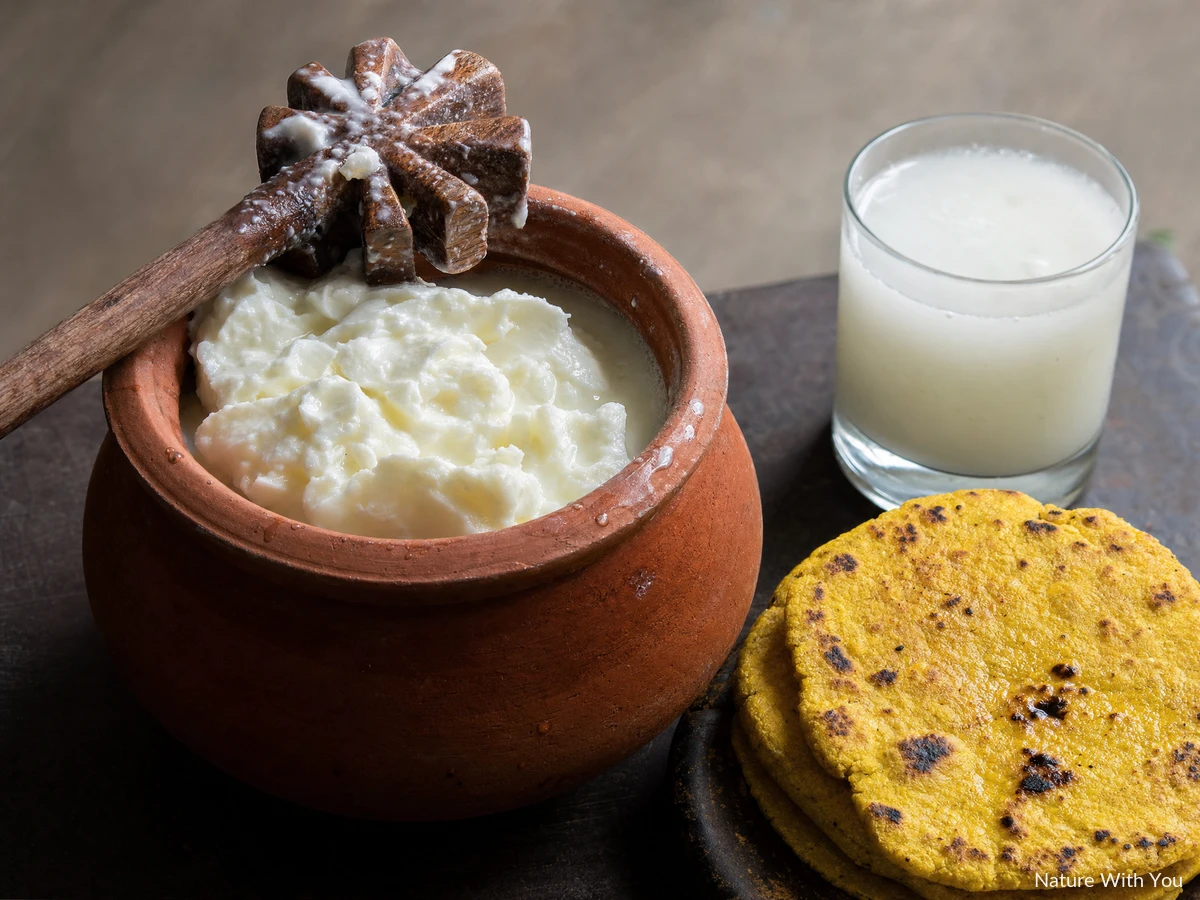
Before butter came in paper wrappers, it came out of a clay pot. Curd set overnight was churned in the morning with a wooden mathani until soft white flecks rose and gathered; those were pressed together by hand into makkhan, and what remained was chaas. White makkhan on a hot makki di roti with sarson ka saag is still the taste of a Punjabi winter. Ayurveda calls fresh butter navaneeta — literally “newly drawn” — and it takes that freshness seriously: the texts praise butter made today and warn against butter kept for days.
✨ Why It’s Special / Importance
- 🥛 The middle step between curd and ghee — churn curd and you get butter, heat butter and you get ghee
- 🌿 Described by Charaka as vrishya (strengthening) and good for complexion, strength and digestive fire
- 🧒 A traditional food for growing children and for the thin and depleted
- 🍞 The fat of the North Indian winter table — with makki di roti, bajre ki roti and parathas
- 🏡 Made at home from the cream skimmed off boiled milk, collected over a week
🏺 Traditional / Ayurvedic Uses
Rasa (Taste): Madhura (Sweet), with a light Kashaya (astringent) and Amla (sour) note Virya (Potency): Sheeta (Cool) Vipaka (Post-digestive): Madhura (Sweet) Guna (Qualities): Snigdha (unctuous), Mridu (soft); Laghu (light) when fresh, Guru (heavy) when stale Dosha Effect: Pacifies Vata and Pitta; increases Kapha, especially when stale or taken in excess
Classical Applications:
- Charaka’s Gorasa varga calls fresh butter vrishya, sheeta, and a builder of varna, bala and agni — complexion, strength and digestive fire — and describes it as sangrahi (binding)
- Sushruta describes butter drawn the same day as light and soft, sweet with a touch of astringent and sour, medhya (good for the mind), deepana (kindling appetite) and hridya (pleasing to the heart)
- Butter kept too long is treated as a different food: it turns sour and heavy and is said to increase Kapha and fat
- Butter churned directly from milk rather than curd is described separately as even cooler and gentler, and traditionally prized for the eyes
💪 Benefits / Health Effects
- ✅ Energy-dense: A small amount supplies a lot of energy — useful for children and the underweight
- ✅ Vitamin A: Butter is one of the richer food sources of preformed vitamin A
- ✅ Carries fat-soluble nutrients: Vitamins A, D, E and K and the carotenes in greens are absorbed with fat
- ✅ Calms dryness: In classical terms, its unctuousness settles the rough, dry quality of Vata
- ✅ Makes dry grains easier: A spoon on bajra, jowar or makki roti softens their dryness
🥗 Nutritional Information (Per 100g, Butter)
| Nutrient | Amount |
|---|---|
| Calories | 717 kcal |
| Carbohydrates | 0.1 g |
| Protein | 0.9 g |
| Fat | 81.1 g |
| Saturated fat | 51.4 g |
| Vitamin A | 684 mcg |
Note: Values are for salted butter (USDA FoodData Central). Homemade white butter holds more water and buttermilk, so it carries somewhat less fat and energy per 100 g, and no added salt.
🔄 Quick Comparison: Butter vs Ghee
| Feature | Butter (Navaneeta) | Ghee (Ghrita) |
|---|---|---|
| Made from | Curd or cream, churned | Butter, heated until clear |
| Rasa | Sweet, slightly astringent–sour | Sweet |
| Virya | Cooling | Cooling |
| Key action | Binding (sangrahi), nourishing | Kindles agni, carries herbs (yogavahi) |
| Keeps | A few days, then turns sour | Months; old ghee is valued separately |
| Cooking | Spread or melted on hot food | Tempering and frying |
Butter is the fresher, softer food; ghee is butter with its water and milk solids cooked away. Ayurveda treats them as two distinct substances rather than one food in two forms.
🥄 How to Use / Prepare
Culinary Tips:
- 🥛 Homemade white butter: Collect the malai from boiled milk in the fridge for a week, set it lightly with a spoon of curd, then churn or whisk with cold water until butter separates
- 💧 Keep the chaas: The liquid left after churning is true buttermilk
- 🔥 Add it after cooking: A spoon on hot roti or dal, rather than frying in it — butter burns quickly
- 🧂 Choose unsalted where you can; packaged butter often carries a good deal of salt
Traditional Home Practices:
- 🌾 With dry grains: White makkhan with bajra or makki roti in winter
- 🍬 Makkhan-mishri: Fresh butter with a little rock sugar, a traditional offering and a children’s treat
- ☀️ Fresh, by day: Butter is best eaten the day it is churned, with the midday meal
⚠️ Precautions / Warnings
- ❗ Butter is very high in saturated fat and calories; a spoon, not a slab, is a serving
- ❗ Stale or sour-smelling butter is regarded as heavy and unwholesome — use it fresh
- ❗ With slow digestion, a heavy cold, or in the damp months, keep butter small; it adds Kapha
- ❗ People with a milk allergy should avoid it
- ⚠️ Homemade butter spoils quickly — refrigerate and use within a few days, or turn it into ghee
🎉 Fun Facts / Trivia
- 🪈 Krishna’s childhood name Makhan Chor — the butter thief — comes from raiding the gopis' butter pots
- 🏺 The bilona method (curd churned, then butter heated) is how ghee has been made in Indian homes for centuries
- 🌕 Navaneeta means “freshly drawn” — the freshness is built into the name
- 🥛 Roughly a week of malai from one household’s milk gives a single small bowl of butter
Frequently Asked Questions (FAQs)
Q: Is white butter better than yellow packaged butter? A: Homemade white butter is fresher, unsalted and churned from curd, which is the form Ayurveda describes. Packaged butter is churned from cream, is usually salted and is kept for weeks — closer to what the texts call stale butter.
Q: Is butter heating or cooling in Ayurveda? A: Cooling. Fresh butter is sheeta in potency, like milk and ghee.
Q: Which is better, butter or ghee? A: They do different things. Butter is binding and nourishing but must be eaten fresh; ghee kindles digestive fire, keeps for months and carries herbs. For cooking, ghee is the classical choice.
Q: Is butter good for Vata? A: Fresh butter settles Vata’s dryness well, in small amounts with warm food. Those with a Kapha constitution should keep it light.
Related Items
Explore More: Grains, Pulses & Dairy • Hidden Treasures • Herbs • Seasonal Picks
📚 Sources
- Charaka Samhita, Sutrasthana 27 (Annapanavidhi Adhyaya) – Gorasa varga, navaneeta
- Sushruta Samhita, Sutrasthana 45 (Dravadravya Vidhi) – navaneeta
- Bhavaprakasha Nighantu – Navaneeta varga
- USDA FoodData Central – Butter, salted