

Chana (Chickpea) – Kala Chana, Sattu, Nutrition & Uses
Chana (chickpea, Bengal gram) in Ayurveda and the Indian kitchen: kala chana, bhuna chana, sattu and besan, with nutrition, dosha effect and how to digest it.
Mon, Sep 28, 2026 · 6 min read🫘 Chana at a Glance
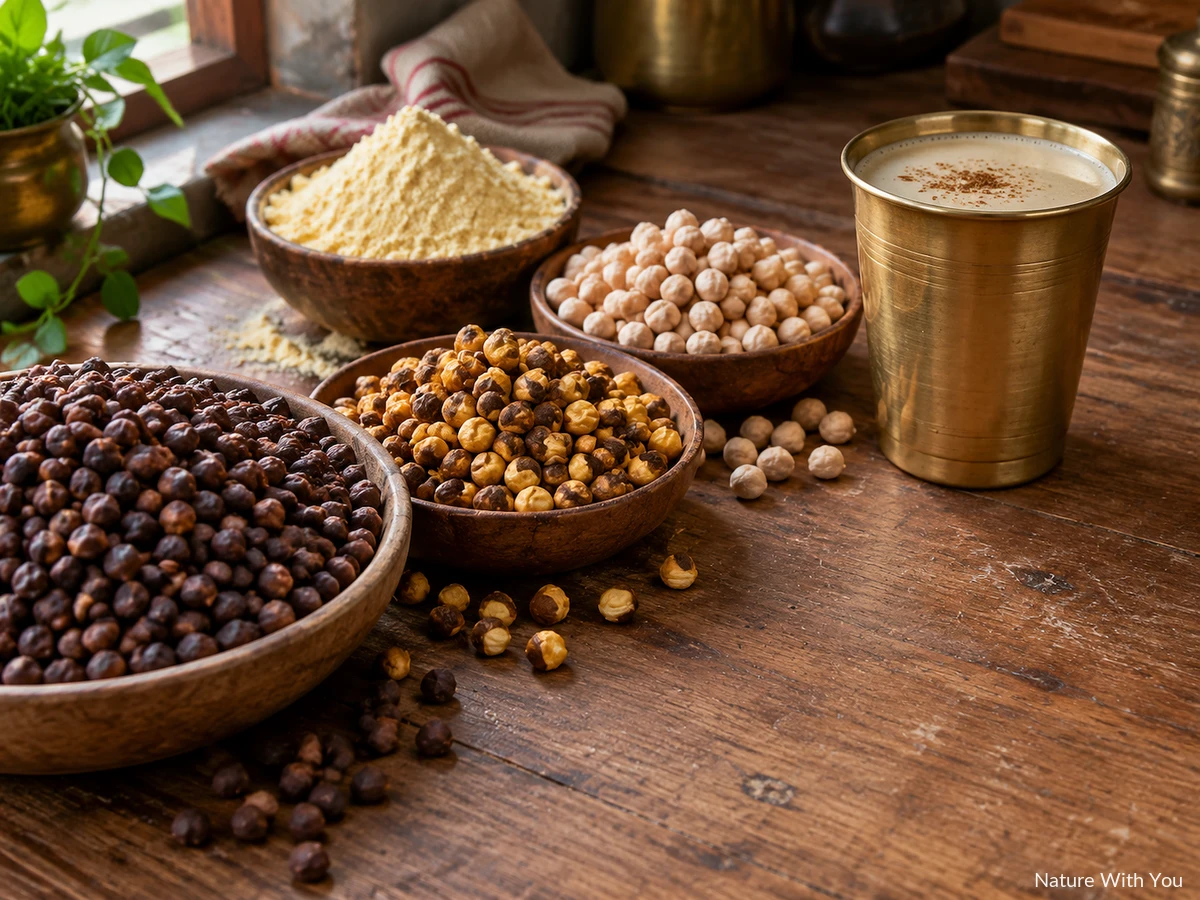
Chana — the chickpea or Bengal gram — is the pulse Indian kitchens reach for most. It turns up as small dark kala chana simmered with spices, as pale kabuli chana in chole, as crunchy bhuna chana in a paper cone, as sattu stirred into water on a hot afternoon, and as besan, the flour behind pakoras, kadhi and cheela. Few foods take so many forms. Under all of them sits the same thing: a dry, dense seed that is rich in protein, fiber and minerals, and that asks to be prepared with some care.
✨ Why It’s Special / Importance
- 💪 One of the richest everyday sources of plant protein in the vegetarian kitchen
- 🌾 Plenty of fiber, which makes it slow to digest and filling
- 🧺 Keeps for months, travels well, and is cheap — the traditional food of farmers and travellers
- 🔥 Roasted, it becomes a ready snack; ground, it becomes sattu or besan
- 🌱 Sprouted, it becomes lighter and livelier than the dry seed
🏺 Traditional / Ayurvedic Uses
Charaka Samhita and Bhavaprakasha place chana (chanaka) among the shamidhanya, the pod-bearing pulses.
Rasa (Taste): Kashaya–Madhura (Astringent–Sweet) Virya (Potency): Sheeta (Cool) Vipaka (Post-digestive): Katu (Pungent), as the texts assign to the pulses as a group Guna (Qualities): Laghu (light), Ruksha (dry) Dosha Effect: Settles Kapha and Pitta; increases Vata, which is why it can cause gas and bloating
Classical Applications:
- Its dryness absorbs excess Kapha, so chana suits heavy, damp constitutions and seasons
- Roasted chana is lighter and drier still than the boiled seed — good for Kapha, harder on Vata
- The texts pair pulses with fat and warming spice to temper their Vata-provoking dryness
- Soaking, sprouting and slow cooking are the kitchen’s answer to vishtambha, the heaviness in the gut that dry pulses bring
💪 Benefits / Health Effects
- ✅ Satiety: Protein and fiber together keep hunger away for longer
- ✅ Steady Energy: Chickpeas digest slowly and have a low glycaemic index, which may support even energy through the day
- ✅ Digestive Regularity: The fiber may support regular bowel movements when chana is well cooked and eaten with water
- ✅ Protein for Vegetarians: Eaten with a grain such as wheat or rice, it rounds out the day’s protein
- ✅ Minerals: Contributes iron, magnesium, potassium and folate
- ✅ Summer Cooling: Sattu sharbat is a traditional way to stay nourished and cool in the heat
🥗 Nutritional Information (Per 100g, Mature Seeds, Raw)
Values are from USDA FoodData Central for chickpeas (garbanzo beans, Bengal gram), mature seeds, raw.
| Nutrient | Amount |
|---|---|
| Calories | 378 kcal |
| Carbohydrates | 63 g |
| Fiber | 12.2 g |
| Protein | 20.5 g |
| Fat | 6 g |
| Iron | 4.3 mg |
| Potassium | 718 mg |
| Folate | 557 µg |
Note: These are dry-seed figures. Soaking and boiling roughly doubles the weight with water, so a cooked 100g portion carries a little under half these amounts. Kala chana (the desi type) has a thicker seed coat and somewhat more fiber than kabuli chana.
🔄 Quick Comparison: Chana vs Moong Dal – Two Pulses, Two Temperaments
| Feature | Chana (Chickpea) | Moong Dal |
|---|---|---|
| Guna | Light but very dry | Light and gentle |
| Effect on Vata | Increases it; can cause gas | Barely disturbs it |
| Best For | Strength, satiety, Kapha seasons | Recovery, weak digestion, everyday dal |
| Typical Use | Chole, sattu, besan, roasted snack | Dal, khichdi, sprouts, cheela |
Charaka names moong the best of the pulses. Chana gives more body and staying power, and asks more of the digestion in return.
🥄 How to Use / Prepare
Culinary Tips:
- 🍲 Kala Chana: Soak overnight, pressure-cook, then temper with ghee, cumin, hing and ginger
- 🥘 Chole: Kabuli chana slow-cooked with onion, tomato and whole spices; pair with rice or roti
- 🥜 Bhuna Chana: Roasted gram, eaten with a piece of gur — a traditional travel and field snack
- 🥤 Sattu: Roasted gram flour stirred into water with salt, roasted cumin and lemon, or into a dough for litti and parathas
- 🥞 Besan: Gram flour for cheela, kadhi, pakoras and laddu
- 🌱 Sprouts: Soak, then sprout for a day or two; steam lightly before eating if raw sprouts sit heavy
Traditional Home Practice:
- 🧘 For Easier Digestion: Discard the soaking water and cook with ajwain, hing and ginger
- 🌿 For Balance: Add a spoon of desi ghee to counter the dryness
⚠️ Precautions / Warnings
- ❗ Chana increases Vata; people prone to gas and bloating should eat smaller portions, always soaked and well cooked
- ❗ Roasted chana is very dry — drink water with it and do not make a whole meal of it
- ❗ Undercooked chana is hard to digest; cook until it crushes easily between the fingers
- ⚠️ People allergic to legumes should take care with chickpeas and besan
🎉 Fun Facts / Trivia
- 🌍 Chickpea was among the earliest pulses domesticated, in the Fertile Crescent of West Asia
- 🇮🇳 India grows more chickpeas than any other country
- 🐎 Roasted and soaked gram was long a standard feed for horses as well as people
- 🥤 Sattu is so central to Bihar that summer there is hard to imagine without it
Frequently Asked Questions (FAQs)
Q: Why does chana cause gas? A: In Ayurvedic terms it is ruksha and increases Vata. Soaking, discarding the water, cooking thoroughly and adding hing, ajwain and ginger usually make it much gentler.
Q: Is roasted chana healthier than boiled chana? A: Neither is simply better. Roasted chana is lighter and drier, so it suits Kapha and makes a handy snack. Boiled chana with ghee and spices is kinder to Vata.
Q: Is kala chana different from kabuli chana? A: Both are the same species. Kala chana is the small, dark desi type with a thicker skin; kabuli chana is larger and cream-coloured. Besan is usually milled from split desi chana.
Q: Is sattu good in summer? A: Chana is cooling in potency, and sattu in water has long been a summer staple in Bihar and eastern Uttar Pradesh.
Related Items
- Moong Dal — the gentlest of the pulses
- Urad Dal — heavy, warming and building
- Paneer — the dairy protein that pairs with chana in chhole-paneer
- Bajra (Pearl Millet) — the dry-land grain chana often grows beside
- Hot and Cold Foods in Ayurveda
- Ayurveda Dosha Food Guide
- Foods for Better Digestion
Explore More: Fruits • Vegetables • Herbs • Natural Remedies • Seasonal Picks • Wellness Tips
📚 Sources
- USDA FoodData Central – Chickpeas (garbanzo beans, bengal gram), mature seeds, raw (SR Legacy)
- Charaka Samhita, Sutrasthana 27 (Annapanavidhi) — Shamidhanya varga
- Bhavaprakasha Nighantu (Bhavamishra), Dhanya Varga — Chanaka