

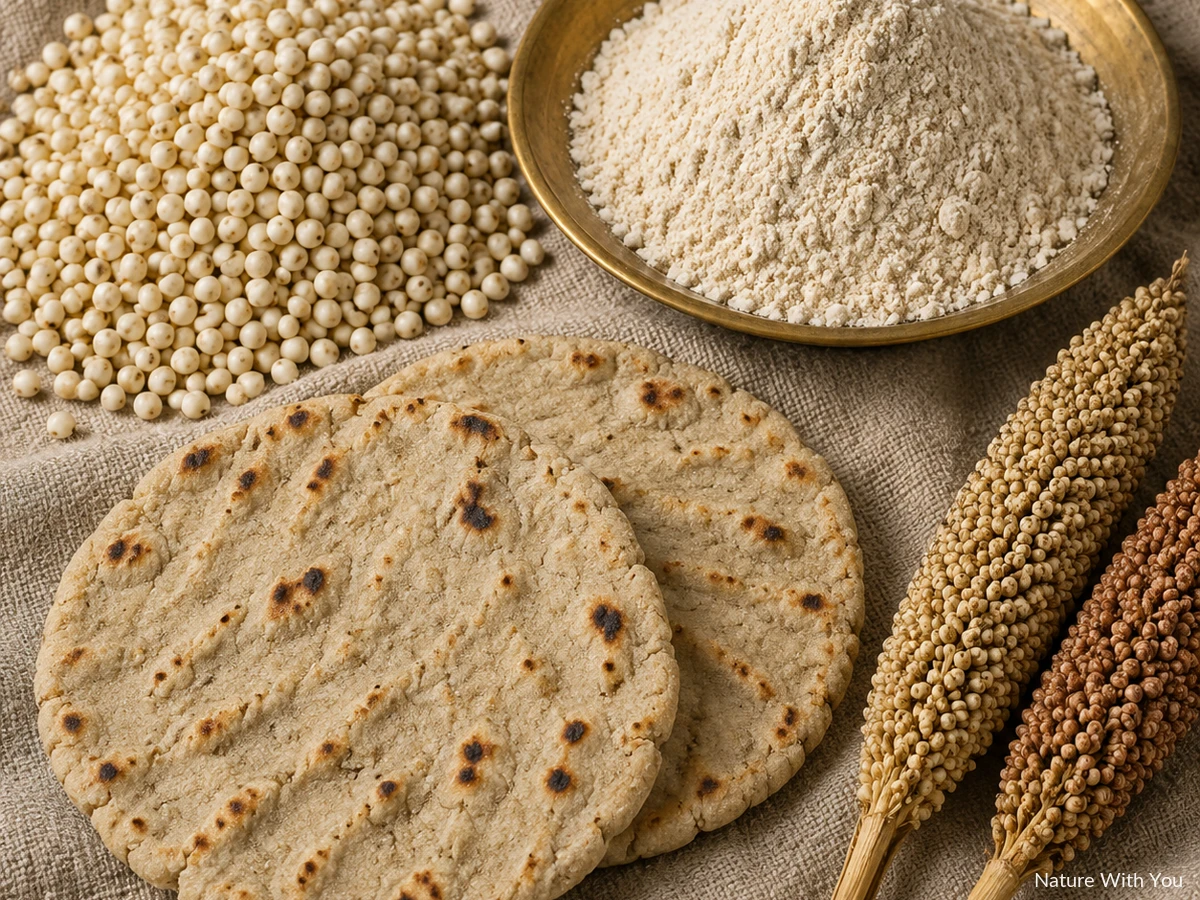
Jowar (Sorghum) – Ayurvedic Nature, Nutrition & Bhakri
Jowar (Sorghum) in Ayurveda: a sweet, cooling, light and dry millet that settles Kapha and Pitta. Gluten-free nutrition, jowar bhakri and roti, and how to balance its dryness.
Tue, Sep 29, 2026 · 5 min read🌾 Jowar at a Glance
Jowar, or sorghum, is the grain the Deccan grew up on. Across Maharashtra, North Karnataka and Telangana, a meal traditionally meant a thick bhakri patted out by hand, with pitla, thecha or a bowl of dal. Ayurveda’s later lexicons call it Yavanala and place it among the lighter grains — sweet, cooling and dry. Where bajra is the millet for winter, jowar is the one that sits comfortably through the heat.
✨ Why It’s Special / Importance
- 🌾 The staple millet of the Deccan — bhakri, rotti, ambil and popped lahya
- ❄️ A cooling millet, unlike heating bajra, so it suits summer and Pitta
- 🚫 Naturally gluten-free, a whole grain for those who avoid wheat
- 💧 Grows on little water and poor soil — one of India’s most climate-hardy crops
- 🥣 Keeps its bran when ground at home, bringing fibre, iron and magnesium
🏺 Traditional / Ayurvedic Uses
Rasa (Taste): Madhura–Kashaya (Sweet, mildly astringent) Virya (Potency): Usually given as Sheeta (Cool) Vipaka (Post-digestive): Commonly given as Madhura (Sweet) Guna (Qualities): Laghu (light), Ruksha (dry) Dosha Effect: Settles Kapha and Pitta; its dryness can aggravate Vata unless eaten with ghee or buttermilk
Classical Applications:
- Jowar does not appear by name in Charaka’s grain lists; it enters the tradition through the Nighantus, which describe Yavanala as sweet, cool, dry and Kapha-reducing
- Its lightness and dryness make it a grain of the Kapha-reducing diet, much like barley
- Being cooling, it is the millet of choice in the hot months, when heating bajra is set aside
- Old practice pairs it with ghee, buttermilk or curd-based sides — the unctuousness corrects its dryness
💪 Benefits / Health Effects
- ✅ Gluten-Free Whole Grain: A roti grain for those who need to avoid gluten
- ✅ Fibre: Whole jowar flour supports regular digestion and a feeling of fullness
- ✅ Steady Energy: Its fibre and complex carbohydrates release energy slowly
- ✅ Minerals: A useful source of iron, magnesium and phosphorus
- ✅ Plant Compounds: Sorghum bran carries polyphenols that have been studied for antioxidant activity
- ✅ Light Staple: Traditionally favoured when a lighter, Kapha-reducing grain is wanted
🥗 Nutritional Information (Per 100g, Whole-Grain Sorghum)
| Nutrient | Amount |
|---|---|
| Calories | 329 kcal |
| Carbohydrates | 72.1 g |
| Fiber | 6.7 g |
| Protein | 10.6 g |
| Fat | 3.5 g |
| Iron | 3.4 mg |
| Magnesium | 165 mg |
| Phosphorus | 289 mg |
Note: Values are for whole-grain sorghum (USDA FoodData Central). Pearled or polished jowar loses part of the bran, and with it some fibre and minerals.
🔄 Quick Comparison: Jowar vs Bajra – Summer Millet, Winter Millet
| Feature | Jowar (Yavanala) | Bajra |
|---|---|---|
| Rasa | Sweet, mildly astringent | Sweet, faintly astringent |
| Virya | Cooling | Heating |
| Guna | Light, dry | Dry, relatively heavy |
| Dosha | Settles Kapha–Pitta, may raise Vata | Counters Kapha and cold Vata, may raise Pitta |
| Season | Summer and autumn | Winter |
| Typical Use | Bhakri, rotti, ambil, lahya | Rotla, khichda, with ghee and jaggery |
🥄 How to Use / Prepare
Culinary Tips:
- 🫓 Bhakri: Jowar has no gluten, so knead the flour with hot water and pat it out by hand rather than rolling
- 🥣 Ambil / Jowar Kanji: A thin fermented porridge of jowar flour and buttermilk — a Karnataka summer drink
- 🍿 Lahya (popped jowar): Dry-roasted like popcorn for a light snack
- 🌾 Mixed Atta: Blend jowar with wheat flour for softer rotis
Traditional Home Practices:
- 🧈 Against dryness: Serve bhakri with a spoon of ghee or with buttermilk
- 🌶️ Pitla-bhakri: The Maharashtrian pairing of jowar with a gram-flour curry balances grain and pulse
⚠️ Precautions / Warnings
- ❗ Its dry nature can cause constipation or gas in Vata-prone people if eaten without fat or liquid
- ❗ Jowar rotis dry out fast; eat them fresh and warm
- ❗ People new to millets should introduce it gradually alongside a familiar grain
- ⚠️ Buy from a source that keeps it gluten-free if that matters to you — cross-contamination at mills is common
🎉 Fun Facts / Trivia
- 🌍 Sorghum is the world’s fifth most important cereal crop, after wheat, rice, maize and barley
- 🌾 India grows two jowar crops — the kharif crop in the rains and the rabi crop of the Deccan’s black soil
- 🌱 Sorghum was first domesticated in Africa and reached the subcontinent in prehistoric times
- 🐄 Jowar stalks, kadba, are among the most important cattle fodders of the Deccan
Frequently Asked Questions (FAQs)
Q: Is jowar cooling or heating? A: Cooling. That is its main difference from bajra, and why jowar is the millet eaten through summer in the Deccan.
Q: Is jowar gluten-free? A: Yes. Jowar contains no gluten, which is also why its dough needs hot water and hand-patting to hold together.
Q: Which dosha should be careful with jowar? A: Vata, because jowar is light and dry. Eating it warm, with ghee, curry or buttermilk, offsets that dryness.
Q: Is jowar better than wheat? A: They suit different needs. Wheat is heavy and building; jowar is light and Kapha-reducing. Many households simply rotate or blend them.
Related Items
- Bajra – the winter millet
- Ragi – the finger millet
- Barley (Jau)
- Hot and Cold Foods in Ayurveda
- Ayurveda Dosha Food Guide
Explore More: Grains, Pulses & Dairy • Vegetables • Herbs • Seasonal Picks
📚 Sources
- USDA FoodData Central – Sorghum grain
- Bhavaprakasha Nighantu – Dhanya varga (Yavanala)
- Kaiyadeva Nighantu – Dhanya varga
- ICAR – Indian Institute of Millets Research, sorghum crop profile