

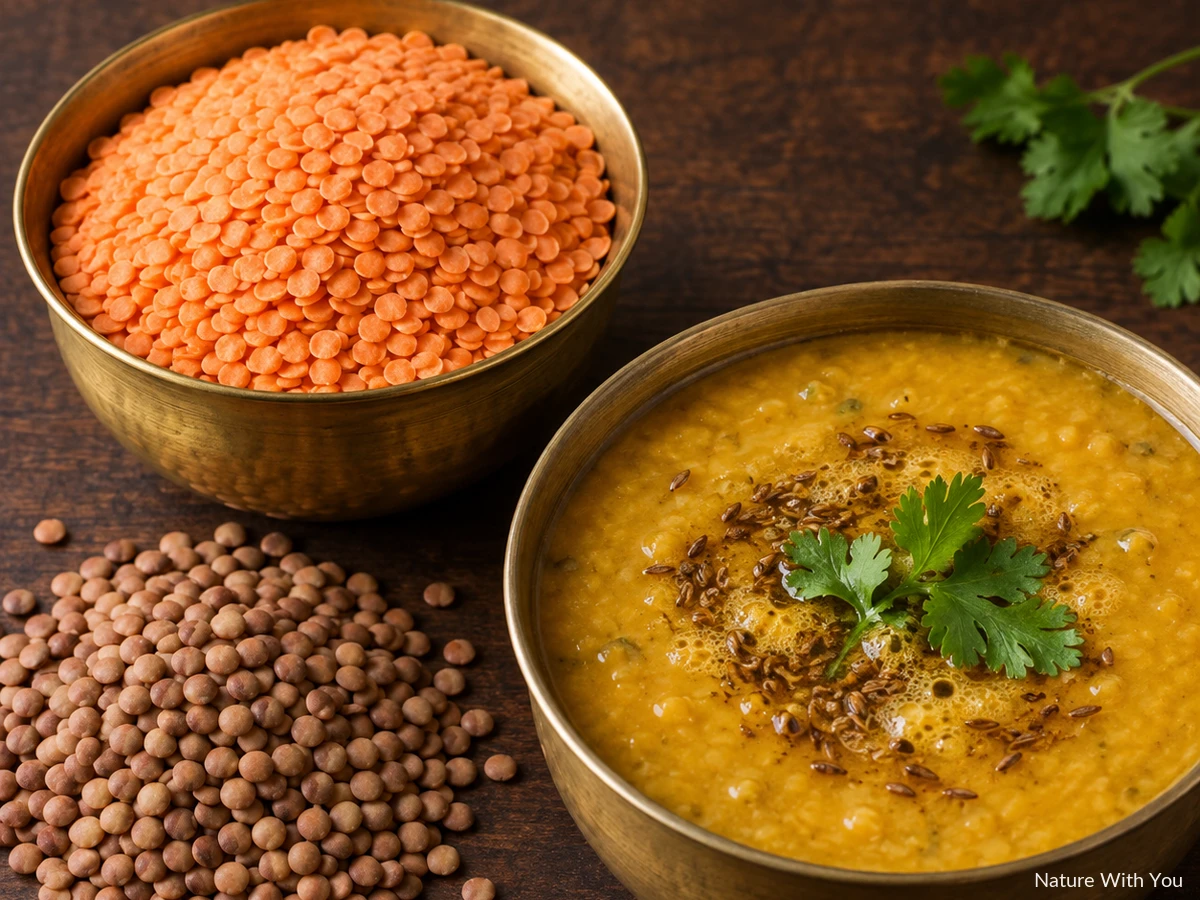
Masoor Dal (Red Lentil) – Ayurvedic Nature, Nutrition & Uses
Masoor Dal (red lentil) in Ayurveda: sweet, cooling, binding Masura that settles Kapha and Pitta. Protein, iron and folate per 100g, how to cook it, and the masoor ubtan.
Tue, Sep 29, 2026 · 5 min read🫘 Masoor Dal at a Glance
Masoor is the dal you make when there is no time. Split and hulled, the little salmon-orange lentils need no soaking and fall soft in about fifteen minutes, turning golden-yellow as they cook. In Bengal it is musur dal with rice; in Punjab and UP it is the plain weeknight dal with a cumin tadka. Ayurveda calls it Masura and places it among the pulses that are cooling and binding — gentle on Pitta, drying to Kapha, and best given a little ghee for Vata.
✨ Why It’s Special / Importance
- ⏱️ The quickest-cooking dal — no soaking, ready in 15–20 minutes
- ❄️ Cooling in potency, so it suits summer meals and Pitta constitutions
- 💪 One of the highest-protein pulses, at about 25 g per 100 g raw
- 🩸 A rich plant source of iron and folate
- 🌸 Ground masoor is a traditional base for the home ubtan (face pack)
🏺 Traditional / Ayurvedic Uses
Rasa (Taste): Madhura–Kashaya (Sweet, astringent) Virya (Potency): Sheeta (Cool) Vipaka (Post-digestive): Katu (Pungent), as the texts assign to the pulses as a group Guna (Qualities): Laghu (light), Ruksha (dry), Grahi (binding) Dosha Effect: Settles Kapha and Pitta; can increase Vata
Classical Applications:
- Charaka’s Annapanavidhi chapter places Masura among the shamidhanya (pulses) that are sweet, cooling, binding and wholesome for Kapha and Pitta
- Bhavaprakasha adds that it is grahi (binding to the stool) and good for the complexion, which is the classical root of the masoor ubtan
- Its light, drying nature made it a pulse for Kapha seasons and for people carrying excess weight
- As with most dry pulses, the texts note it can raise Vata — cooking it soupy with ghee and hing corrects this
💪 Benefits / Health Effects
- ✅ Plant Protein: About 25 g per 100 g raw — a strong protein source for vegetarian meals
- ✅ Iron and Folate: Among the richer pulse sources of both
- ✅ Fibre: Supports digestion and a steady feeling of fullness
- ✅ Slow-Release Energy: Lentils have a low glycaemic index
- ✅ Potassium, Little Fat: A mineral-rich pulse with almost no fat
- ✅ Skin Care: Used externally in the traditional ubtan to brighten and gently exfoliate
🥗 Nutritional Information (Per 100g, Raw Lentils)
| Nutrient | Amount |
|---|---|
| Calories | 352 kcal |
| Carbohydrates | 63.4 g |
| Fiber | 10.7 g |
| Protein | 24.6 g |
| Fat | 1.1 g |
| Iron | 6.5 mg |
| Folate | 479 mcg |
| Potassium | 677 mg |
Note: Values are for raw lentils (USDA FoodData Central). Split, hulled masoor has a little less fibre than whole brown masoor, which keeps its seed coat.
🔄 Quick Comparison: Masoor Dal vs Moong Dal
| Feature | Masoor Dal (Masura) | Moong Dal (Mudga) |
|---|---|---|
| Rasa | Sweet, astringent | Astringent, sweet |
| Virya | Cooling | Cooling |
| Guna | Light, dry, binding | Light, dry |
| Dosha | Settles Kapha–Pitta, may raise Vata | Settles Kapha–Pitta; the gentlest on all three |
| Cooking Time | 15–20 minutes, no soaking | 20–25 minutes |
| Classical Role | Everyday dal, ubtan | Dal for the convalescent, khichdi |
🥄 How to Use / Prepare
Culinary Tips:
- 🍲 Plain masoor dal: Rinse, pressure-cook with turmeric and salt, finish with a tadka of cumin, garlic and red chilli in ghee
- 🍚 Musur dal: The Bengali way — thin, with panch phoron and a squeeze of lime, eaten with rice
- 🫘 Sabut masoor: Whole brown masoor cooked slow with onion and tomato for a heartier dal
- 🥗 Masoor salad: Whole masoor soaked, sprouted and tossed with onion, lemon and cumin
Traditional Home Practices:
- 🌸 Masoor ubtan: Powdered masoor mixed with a pinch of turmeric and raw milk or rose water, applied as a face pack and washed off
- 🌿 For easier digestion: Add a pinch of hing and a little ginger to the tadka
⚠️ Precautions / Warnings
- ❗ Being dry and binding, large amounts can cause gas or constipation in Vata-prone people
- ❗ Soupy dal with ghee digests far more easily than thick, dry preparations
- ❗ Lentils are high in purines and potassium; those advised to limit either should keep portions moderate
- ⚠️ Rinse well to remove dust and the starchy film, and discard any stones
🎉 Fun Facts / Trivia
- 🌍 Lentils are among the oldest cultivated crops, grown in the Fertile Crescent over 9,000 years ago
- 🇮🇳 India is one of the world’s largest producers and consumers of lentils
- 🟠 Split masoor is orange, but turns yellow as it cooks
- 📐 The lens in your spectacles is named after the lentil — Lens is the plant’s Latin name
Frequently Asked Questions (FAQs)
Q: Is masoor dal hot or cold in nature? A: Cold. Classical texts give Masura a sheeta virya. It is cooling, light and binding.
Q: Is masoor dal better than moong dal? A: Both are light and cooling. Moong is gentler on digestion and preferred after illness; masoor cooks faster and is slightly more binding.
Q: Can masoor dal be eaten every day? A: Yes, as part of a varied diet. Rotating it with moong, toor and chana keeps the meal balanced and avoids excess dryness.
Q: Why does masoor dal cause gas for some people? A: Its dry, Vata-raising nature. Cooking it soft, adding hing and ginger, and finishing with ghee usually helps.
Related Items
- Moong Dal – the lightest pulse
- Toor Dal (Arhar)
- Chana
- Urad Dal – heavy and warming
- Ayurveda Dosha Food Guide
Explore More: Grains, Pulses & Dairy • Vegetables • Herbs • Seasonal Picks
📚 Sources
- USDA FoodData Central – Lentils, raw
- Charaka Samhita, Sutrasthana 27 (Annapanavidhi Adhyaya) – Shamidhanya varga
- Ashtanga Hridaya, Sutrasthana 6 (Annasvarupa Vijnaniya)
- Bhavaprakasha Nighantu – Dhanya varga (Masura)