

Moong Dal – Lightest Pulse in Ayurveda, Nutrition & Uses
Moong dal (green gram, Mudga): why Charaka ranks it the best of all pulses, its protein and folate per 100g, and khichdi, chilla and sprout ideas.
Mon, Sep 28, 2026 · 6 min read🫘 Moong Dal at a Glance
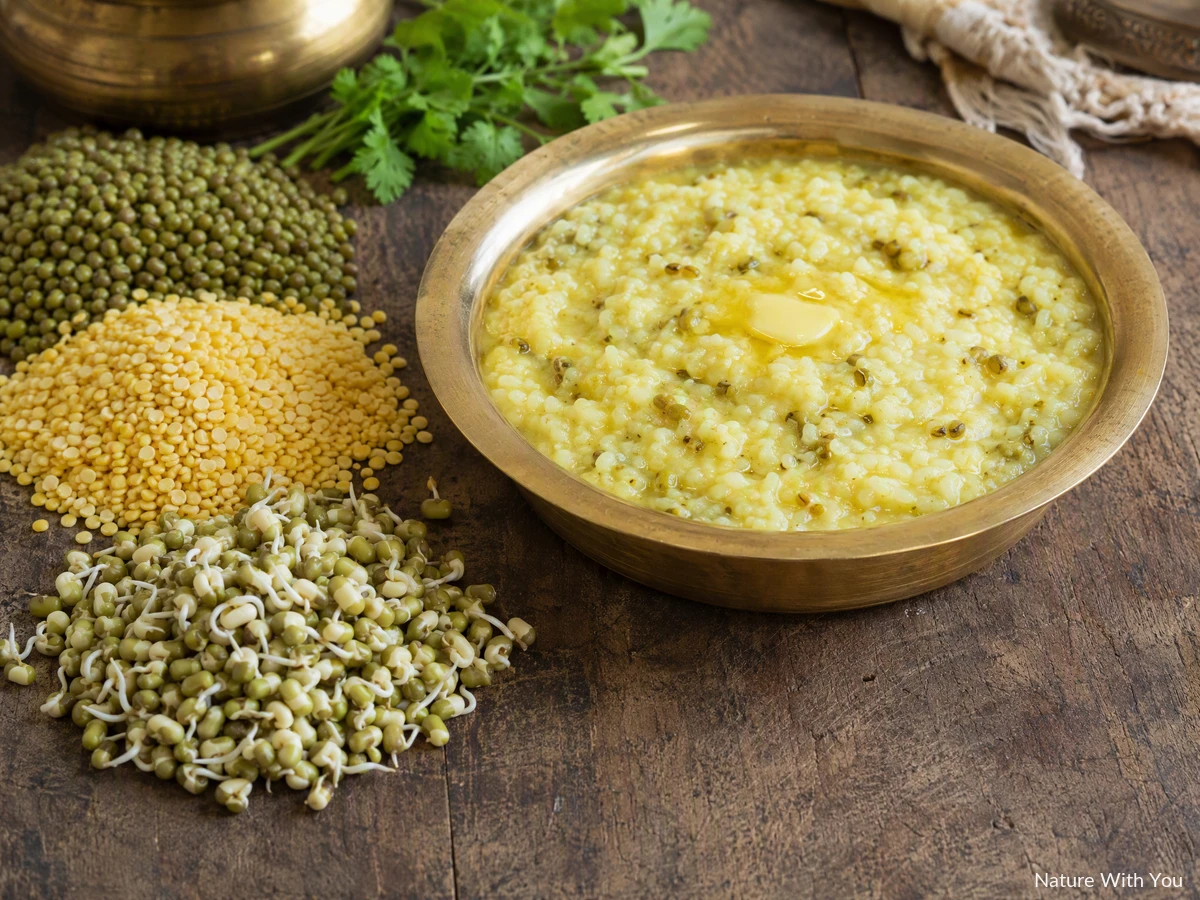
Moong is the small green bean (Vigna radiata) that every Indian kitchen keeps in three forms: whole green moong for sprouts and sabut moong dal, split with the skin on (chilka moong) for everyday dal and chilla, and skinned yellow moong (dhuli moong) for khichdi, soup and halwa. In English it is green gram or mung bean; the classical texts call it Mudga.
If urad is the heavy, building pulse, moong is the light one. It is the dal cooked for a child’s first meals, for the day after a fever, and for anyone whose digestion needs a rest.
✨ Why It’s Special / Importance
- 🏆 Named by Charaka Samhita as the best of all pulses
- 🪶 The lightest common dal to digest, and the least likely to cause gas
- 💪 About 24 g of protein per 100g of raw seed, with generous folate and potassium
- 🌱 Sprouts easily at home in a day or two
- 🍲 Works everywhere — khichdi, dal, soup, chilla, sprouts salad and even halwa
🏺 Traditional / Ayurvedic Uses
Rasa (Taste): Kashaya–Madhura (Astringent–Sweet) Virya (Potency): Sheeta (Cool) Vipaka (Post-digestive): Katu (Pungent) Guna (Qualities): Laghu (light), Ruksha (dry) Dosha Effect: Pacifies Kapha and Pitta; its dryness is balanced with a little ghee
Classical Applications:
- Charaka Samhita ranks Mudga the finest of the shamidhanya, the podded grains — the benchmark against which other pulses are judged
- It is the standard pathya (wholesome) food: mudga yusha, a thin, spiced moong soup, is the classical meal for recovery and for weak agni
- Moong and rice cooked together as khichdi are the traditional food for resting the digestion
- Its cooling nature makes it a pulse for summer and Sharad (early autumn); Ashtanga Hridaya lists mudga among the foods for Sharad, when Pitta runs high — see the Ritucharya guide
- Tempered with cumin, ginger and a pinch of hing, it becomes lighter still
In Ayurveda’s own reckoning this is ahara (food), not aushadha.
💪 Benefits / Health Effects
- ✅ Easy Digestion: Its lightness makes it well suited to weak appetite, recovery days and simple evening meals
- ✅ Plant Protein: A gentle protein source for children, elders and vegetarian diets
- ✅ Folate and Potassium: Contributes folate for everyday nourishment and potassium for fluid balance
- ✅ Fullness: Fiber and protein together may help keep meals satisfying without heaviness
- ✅ Cooling Summer Food: Its sheeta nature fits hot weather better than most pulses
🥗 Nutritional Information (Per 100g, Raw)
Figures are USDA FoodData Central values for mung beans, mature seeds, raw (whole moong). Skinned yellow dal has somewhat less fiber.
| Nutrient | Amount |
|---|---|
| Calories | 347 kcal |
| Carbohydrates | 62.6 g |
| Fiber | 16.3 g |
| Protein | 23.9 g |
| Fat | 1.2 g |
| Iron | 6.7 mg |
| Folate | 625 µg |
| Potassium | 1246 mg |
Note: Dry dal roughly triples in weight when cooked, so a cooked bowl carries about a third of these figures per 100g.
🔄 Quick Comparison: Moong Dal vs Urad Dal
| Feature | Moong Dal (Mudga) | Urad Dal (Masha) |
|---|---|---|
| Virya | Sheeta (cool) | Ushna (hot) |
| Digestion | Laghu — light, quick | Guru — heavy, slow |
| Dosha Effect | Pacifies Kapha and Pitta | Pacifies Vata; raises Kapha, Pitta |
| Best For | Recovery, weak digestion, summer | Strength, winter, strong digestion |
| Typical Dishes | Khichdi, chilla, sprouts, dal ka pani | Dal makhani, idli, dosa, vada |
🥄 How to Use / Prepare
Culinary Tips:
- 🍚 Moong Khichdi: Yellow moong and rice in equal parts, cooked soft with turmeric, cumin and a spoon of ghee
- 🥞 Moong Chilla: Soak split moong 3–4 hours, grind with ginger and green chilli, and cook thin pancakes on a tawa
- 🌱 Sprouts: Soak whole moong overnight, drain, and keep covered for a day or two; steam lightly before eating if raw sprouts feel heavy
- 🥣 Dal ka Pani: The thin water from well-cooked yellow moong, lightly salted — the traditional first food after illness and an early food for infants
- 🍲 Lauki-Moong Dal: Cook with bottle gourd for an especially light summer meal
Traditional Home Practice:
- 🧘 Resting the digestion: A day of moong khichdi or moong soup is the classic home way to give an overworked stomach a break
- 🌿 Coming back to food: Home practice moves step by step — thin moong soup, then thicker dal, then khichdi, then regular meals — as appetite returns
⚠️ Precautions / Warnings
- ❗ Moong is naturally dry (ruksha); people with a strong Vata tendency do better with ghee and warm spices added
- ❗ Raw sprouts can feel heavy and gassy for some — light steaming helps
- ❗ Keep sprouts clean, rinse them twice a day and eat them fresh
- ⚠️ Skinned dal is lighter than whole moong; choose the form to suit the digestion
🎉 Fun Facts / Trivia
- 🌱 Most “bean sprouts” sold in Asian cooking worldwide are sprouted mung beans
- 🍮 Moong dal halwa, a Rajasthani wedding sweet, is the rich exception to moong’s light reputation
- 🟢 Whole moong is green, the split skin-on dal is green-and-yellow, and the skinned dal is pale yellow — all the same bean
- 🌾 Moong is a short-season crop, often ready within about two to three months of sowing
Frequently Asked Questions (FAQs)
Q: Is moong dal hot or cold in nature? A: Cool. Classical texts give Mudga a sheeta virya, which is why it suits summer and Pitta-prone people.
Q: Why is moong dal given during illness? A: It is the lightest pulse to digest. Thin moong soup and soft khichdi give nourishment without taxing a weak digestion, which is why they are the classical recovery foods.
Q: Is yellow moong or green moong better? A: Yellow (skinned) is lighter and suits recovery and weak digestion. Whole green moong keeps more fiber and is better for sprouts and everyday meals.
Q: Can moong dal be eaten at night? A: Yes. It is one of the few dals traditionally considered light enough for a simple evening meal.
Related Items
- Urad Dal — the heavy, warming counterpart
- Rice — moong’s partner in khichdi
- Masoor Dal — the other quick, cooling dal
- Toor Dal (Arhar) — the everyday dal of dal-chawal and sambar
- Foods for Better Digestion
- Summer Fruits and Vegetables — the season moong suits best
- Cumin (Jeera) — the everyday tempering for moong dal
Explore More: Grains, Pulses & Dairy • Vegetables • Herbs • Seasonal Picks • Holistic Living
📚 Sources
- USDA FoodData Central – Mung beans, mature seeds, raw (SR Legacy)
- Charaka Samhita, Sutrasthana 27 (Annapanavidhi Adhyaya), Shamidhanya Varga — Mudga
- Ashtanga Hridaya (Vagbhata), Sutrasthana 6 (Annasvarupa Vijnaniya) — Shimbi Dhanya
- Ashtanga Hridaya (Vagbhata), Sutrasthana 3 (Ritucharya) — Sharad diet
- Bhavaprakasha Nighantu (Bhavamishra), Dhanya Varga — Mudga