

Paneer – Ayurvedic Nature, Protein & How to Eat It Lighter
Paneer in Ayurveda: a heavy, building, Kapha-increasing dairy food best suited to strong digestion. Protein and calcium per 100g, homemade chhena, and how to eat it lighter.
Tue, Sep 29, 2026 · 5 min read🧀 Paneer at a Glance
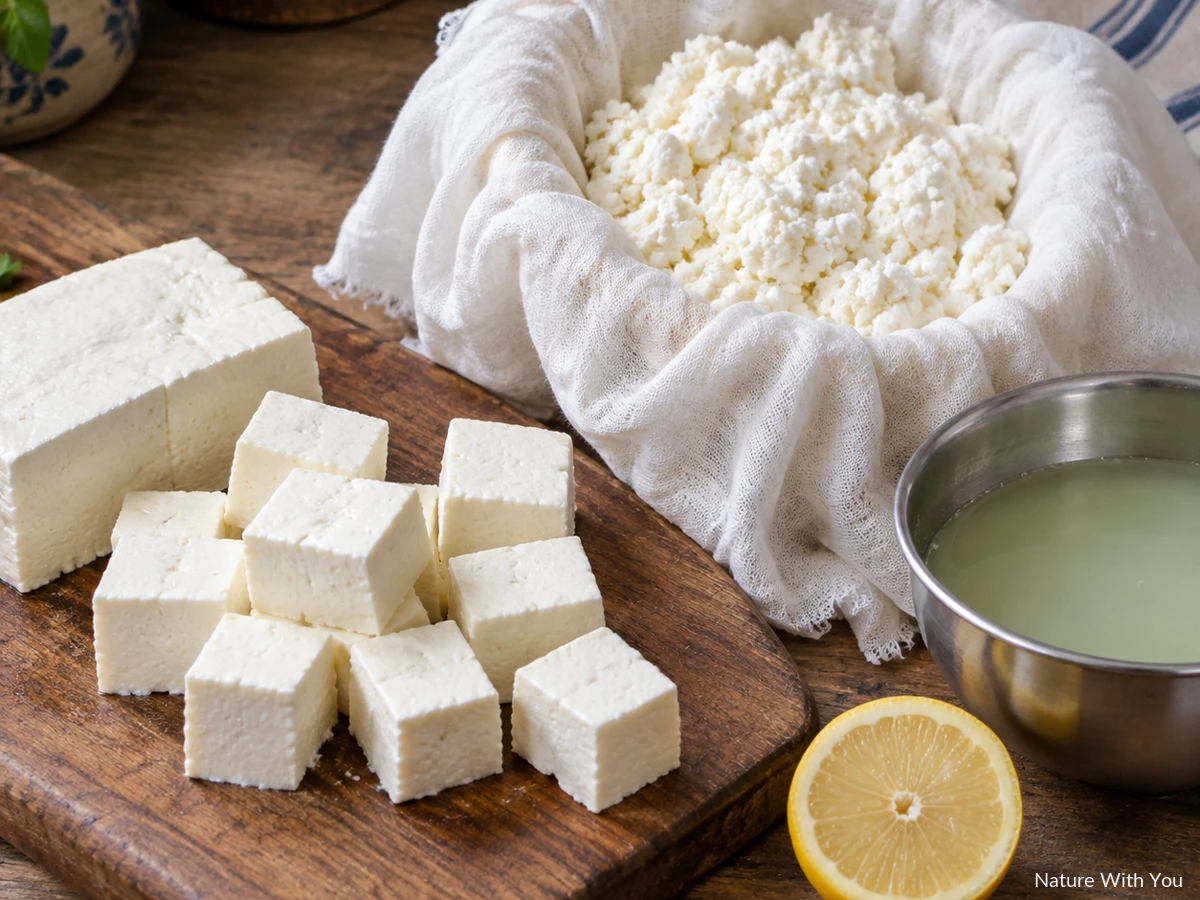
Paneer is what happens when hot milk meets something sour. A squeeze of lemon, and the milk separates into soft white curds and greenish whey; drained in muslin and pressed, the curds become the firm, mild cheese of palak paneer and paneer tikka. For a vegetarian household it is the most concentrated dairy protein in the kitchen. Ayurveda, which never used the word paneer, would still recognise it at once — and would call it heavy: nourishing and strength-building, but a food for a strong digestion rather than a weak one.
✨ Why It’s Special / Importance
- 💪 One of the richest vegetarian protein sources in Indian cooking
- 🦴 Carries most of milk’s calcium and phosphorus into a dense, easily stored form
- 🍛 The centrepiece of North Indian festive food — shahi paneer, matar paneer, paneer tikka
- 🍬 As soft chhena, the base of Bengali and Odia sweets like rasgulla and sandesh
- 🏡 Made at home in fifteen minutes with only milk and lemon
🏺 Traditional / Ayurvedic Uses
Rasa (Taste): Madhura (Sweet) Virya (Potency): Sheeta (Cool) Vipaka (Post-digestive): Madhura (Sweet) Guna (Qualities): Guru (very heavy), Snigdha (unctuous), Sthira (dense) Dosha Effect: Pacifies Vata and Pitta; strongly increases Kapha
Classical Applications:
- Sushruta and Bhavaprakasha describe kurchika (milk split with curd) and takrapinda (milk split with buttermilk) — the classical relatives of paneer — as guru, brimhana (building) and vrishya, and as foods that are slow to digest
- Because they are so heavy, the texts reserve them for people with a strong digestive fire and for those doing hard physical work
- The same texts warn that such heavy milk products taken by someone with weak digestion lead to indigestion and Kapha build-up
- Fresh, soft paneer is lighter than paneer that has been pressed hard, fried or stored for days
💪 Benefits / Health Effects
- ✅ Protein: About 18 g per 100 g, with all the essential amino acids of dairy protein
- ✅ Bones and Teeth: A good source of calcium and phosphorus
- ✅ Satiety: Protein and fat together keep hunger away for hours
- ✅ Low in Carbohydrate: Most of milk’s lactose drains off with the whey
- ✅ Building Food: Traditionally favoured for growing children and people who need to gain strength
🥗 Nutritional Information (Per 100g, Paneer)
| Nutrient | Amount |
|---|---|
| Calories | 265 kcal |
| Carbohydrates | 1.2 g |
| Protein | 18.3 g |
| Fat | 20.8 g |
| Calcium | 208 mg |
| Phosphorus | 138 mg |
Note: Values are from the National Institute of Nutrition’s Nutritive Value of Indian Foods. Paneer made from buffalo milk or full-cream milk carries more fat; paneer made from toned milk carries less.
🔄 Quick Comparison: Paneer vs Chana – Two Vegetarian Proteins
| Feature | Paneer | Chana (Chanaka) |
|---|---|---|
| Rasa | Sweet | Astringent–sweet |
| Virya | Cooling | Cooling |
| Guna | Heavy, unctuous | Light, dry |
| Dosha | Calms Vata–Pitta, adds Kapha | Settles Kapha–Pitta, raises Vata |
| Protein (100g) | About 18 g | About 20 g (dry) |
| Fibre | None | High |
The two balance each other well: the dryness of chana is softened by paneer’s unctuousness, and paneer’s heaviness is lightened by chana’s roughage.
🥄 How to Use / Prepare
Culinary Tips:
- 🍋 Homemade paneer: Bring milk to a boil, add lemon juice a spoon at a time until it splits, strain through muslin and rinse off the sourness
- 🥬 Palak paneer and matar paneer: Cooking paneer with greens or peas adds fibre it lacks
- 🔥 Grill, don’t deep-fry: Tikka and bhurji keep it lighter than fried pakoras
- 💧 Keep the whey: Use it to knead atta or cook dal — it carries water-soluble nutrients
Traditional Home Practices:
- 🌶️ Spice to digest: Cumin, black pepper, ginger and ajwain are the classical partners that help such a heavy food digest
- ☀️ Eat it at midday: Digestive fire is strongest at lunch, making it the easiest time for heavy foods
⚠️ Precautions / Warnings
- ❗ Paneer is dense in fat and calories; portion size matters for anyone watching weight
- ❗ Heavy and Kapha-increasing, it can feel sluggish with slow digestion, congestion or in the cold, wet months
- ❗ Avoid it as a late dinner, when digestive strength is lowest
- ❗ People with a milk-protein allergy should avoid it; lactose content is low but not zero
- ⚠️ Buy fresh and refrigerate; stale paneer turns sour and is harder still to digest
🎉 Fun Facts / Trivia
- 🏺 The word paneer came into Hindi from Persian, where it means cheese
- 🍬 Bengal’s rasgulla and sandesh are made from chhena — paneer that has not been pressed
- 🧀 Paneer does not melt like aged cheese, because it is set with acid rather than rennet
- 🥛 Roughly 1 litre of whole milk gives about 180–200 g of paneer
Frequently Asked Questions (FAQs)
Q: Is paneer heavy to digest according to Ayurveda? A: Yes. Its classical relatives, kurchika and takrapinda, are described as very heavy, so paneer suits a strong appetite better than a weak one.
Q: Can paneer be eaten at night? A: Ayurveda prefers heavy foods at midday. A small portion at an early dinner, well spiced, is gentler than a large late one.
Q: Is paneer good for Kapha types? A: It is best kept small for Kapha. Pair it with light, pungent and bitter vegetables and generous spices, or choose moong dal as the protein instead.
Q: Is homemade paneer better than packaged? A: Fresh homemade paneer is softer and lighter, and you control the milk it is made from. Packaged paneer is often pressed harder and kept longer.
Related Items
- Milk (Doodh)
- Chana – the protein pulse
- Moong Dal – the lightest pulse
- Curd (dahi)
- Khoa (Mawa) – milk cooked down
- Ayurveda Dosha Food Guide
Explore More: Grains, Pulses & Dairy • Vegetables • Herbs • Seasonal Picks
📚 Sources
- National Institute of Nutrition (ICMR) – Nutritive Value of Indian Foods, milk and milk products
- Sushruta Samhita, Sutrasthana 45 (Dravadravya Vidhi) – milk products
- Bhavaprakasha Nighantu – Dugdha varga (kurchika, takrapinda)
- Charaka Samhita, Sutrasthana 27 (Annapanavidhi Adhyaya) – Gorasa varga