

Ragi (Finger Millet) – Mandua Benefits, Nutrition & Uses
Ragi (finger millet, mandua, nachni): a calcium-rich, gluten-free millet. Its traditional nature, NIN nutrition, ragi vs bajra, and how to cook it well.
Mon, Sep 28, 2026 · 5 min read🌾 Ragi at a Glance
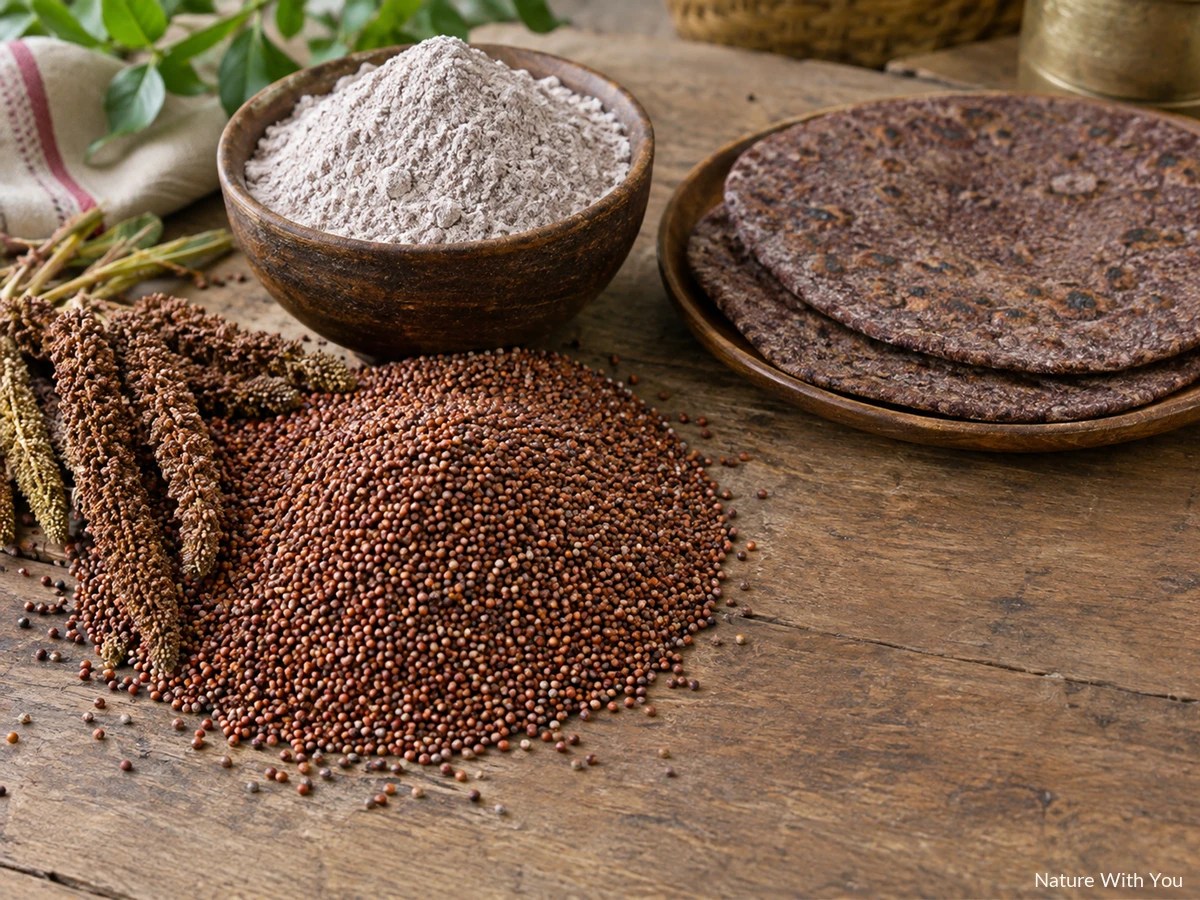
Ragi, or Finger Millet, is a tiny reddish-brown grain that grows where little else will — on thin hill soils and in dry, uncertain rain. Known as mandua in Uttarakhand, nachni in Maharashtra and ragi across Karnataka, it is gluten-free, filling and unusually rich in calcium. For generations it has been the everyday grain of farming families, and it is now finding its way back into city kitchens as porridge, rotis and dosa.
✨ Why It’s Special / Importance
- 🦴 Among the richest cereals in calcium — about 344 mg per 100g
- 🌾 Gluten-free and naturally whole-grain, since the tiny seed is ground with its bran
- 🌧️ Hardy and drought-tolerant; the grain stores for years without spoiling
- 🍼 Sprouted ragi malt is a traditional first food for infants in Karnataka
- 🏔️ A living link to hill food traditions — mandua roti with ghee and jaggery
🏺 Traditional / Ayurvedic Uses
Ragi is not described in the Charaka or Sushruta Samhitas. It came into the Ayurvedic lexicons late, and what we know of its nature comes largely from regional food practice rather than a classical chapter. The properties below are those commonly given in Ayurvedic dietary writing today.
Rasa (Taste): Madhura–Kashaya (Sweet–Astringent) Virya (Potency): Usually given as Sheeta (Cool) Vipaka (Post-digestive): Commonly given as Madhura (Sweet); no classical text fixes it Guna (Qualities): Laghu (light), Ruksha (dry) Dosha Effect: Generally described as settling Pitta and Kapha; its dryness may aggravate Vata unless eaten with ghee or buttermilk
Traditional Applications:
- In Karnataka, ragi ambli (thin fermented porridge with buttermilk) is a summer cooler
- In the Kumaon and Garhwal hills, mandua roti is a winter staple and is locally thought of as warming — a reminder that regional views of its nature differ
- Sprouted, dried and ground, ragi becomes malt for children and convalescents
💪 Benefits / Health Effects
- ✅ Bone Nourishment: Its calcium may support bone health as part of a varied diet
- ✅ Lasting Fullness: Fiber and slow-digesting starch may help keep hunger in check
- ✅ Gluten-Free Staple: A practical grain for those avoiding gluten
- ✅ Iron and Minerals: Contributes iron, phosphorus and magnesium
- ✅ Better with Soaking: Sprouting and fermenting are studied for improving mineral availability
- ✅ Everyday Wholegrain: Because the seed is too small to polish, ragi flour keeps its bran
🥗 Nutritional Information (Per 100g, Whole Ragi)
USDA FoodData Central has no dedicated finger millet entry, so these figures are from the National Institute of Nutrition’s Nutritive Value of Indian Foods for whole ragi grain (ragi flour is the same grain ground whole).
| Nutrient | Amount |
|---|---|
| Calories | 328 kcal |
| Carbohydrates | 72 g |
| Fiber (crude) | 3.6 g |
| Protein | 7.3 g |
| Fat | 1.3 g |
| Calcium | 344 mg |
| Iron | 3.9 mg |
Note: Crude fiber understates the total. The newer Indian Food Composition Tables (2017), which measure total dietary fiber, report a considerably higher figure. Values also vary by variety.
🔄 Quick Comparison: Ragi vs Bajra – The Millet Pair
| Feature | Ragi (Finger Millet) | Bajra (Pearl Millet) |
|---|---|---|
| Nature | Usually described as cooling | Heating (ushna) |
| Standout | Calcium | Iron, higher protein and fat |
| Traditional In | Karnataka, Uttarakhand, Maharashtra | Rajasthan, Gujarat, Haryana |
| Typical Use | Mudde, porridge, malt, dosa | Winter roti, khichdi |
| Season | Year-round; porridge in summer | Mainly winter |
🥄 How to Use / Prepare
Culinary Tips:
- 🍲 Ragi Mudde: Flour stirred into boiling water into soft balls, eaten with sambar or saag
- 🫓 Mandua Roti: Knead with warm water (a little wheat helps binding); serve with ghee
- 🥣 Porridge: Cook flour in water or milk, sweeten lightly with jaggery
- 🥞 Ragi Dosa: Mix with rice and urad batter and ferment overnight
Traditional Home Remedies:
- 🌱 Ragi Malt: Soak, sprout, dry and grind the grain, then cook as a thin porridge
- 🧊 For Summer Heat: Thin ragi porridge stirred into buttermilk with a pinch of salt
⚠️ Precautions / Warnings
- ❗ Ragi’s dry quality can feel heavy or constipating for Vata types — add ghee and drink enough water
- ❗ It contains oxalates; those prone to kidney stones may prefer moderate amounts
- ❗ Introduce it gradually if you are not used to whole millets, to avoid bloating
- ⚠️ Always cook ragi flour through; raw or undercooked flour is hard to digest
🎉 Fun Facts / Trivia
- 🌍 Finger millet was domesticated in the highlands of East Africa and reached India in prehistory
- ✋ The name comes from its seed heads, which spread like the fingers of a hand
- 🏅 The United Nations declared 2023 the International Year of Millets, at India’s proposal
- 🏔️ In Nepal and parts of the Himalaya the same grain is called kodo
Frequently Asked Questions (FAQs)
Q: Is ragi cooling or heating? A: South Indian practice treats it as cooling; hill communities often call mandua warming. Most Ayurvedic writers give it as sheeta. See hot and cold foods.
Q: Is ragi mentioned in Charaka Samhita? A: No. It entered Ayurvedic writing later, so its properties rest on regional tradition rather than a classical text.
Q: Can ragi be eaten every day? A: Yes, in reasonable portions and rotated with other grains, with ghee or buttermilk to offset its dryness.
Q: Why does ragi flour turn dark when cooked? A: The seed coat is naturally reddish-brown, and since ragi is ground whole, that colour deepens on cooking.
Related Items
Explore More: Fruits • Vegetables • Herbs • Natural Remedies • Seasonal Picks • Wellness Tips
📚 Sources
- National Institute of Nutrition (ICMR), Nutritive Value of Indian Foods — ragi (Eleusine coracana), whole grain
- National Institute of Nutrition (ICMR), Indian Food Composition Tables, 2017 — finger millet
- United Nations General Assembly — International Year of Millets 2023
- Regional food traditions of Karnataka and Uttarakhand — ragi ambli, ragi mudde, mandua roti