

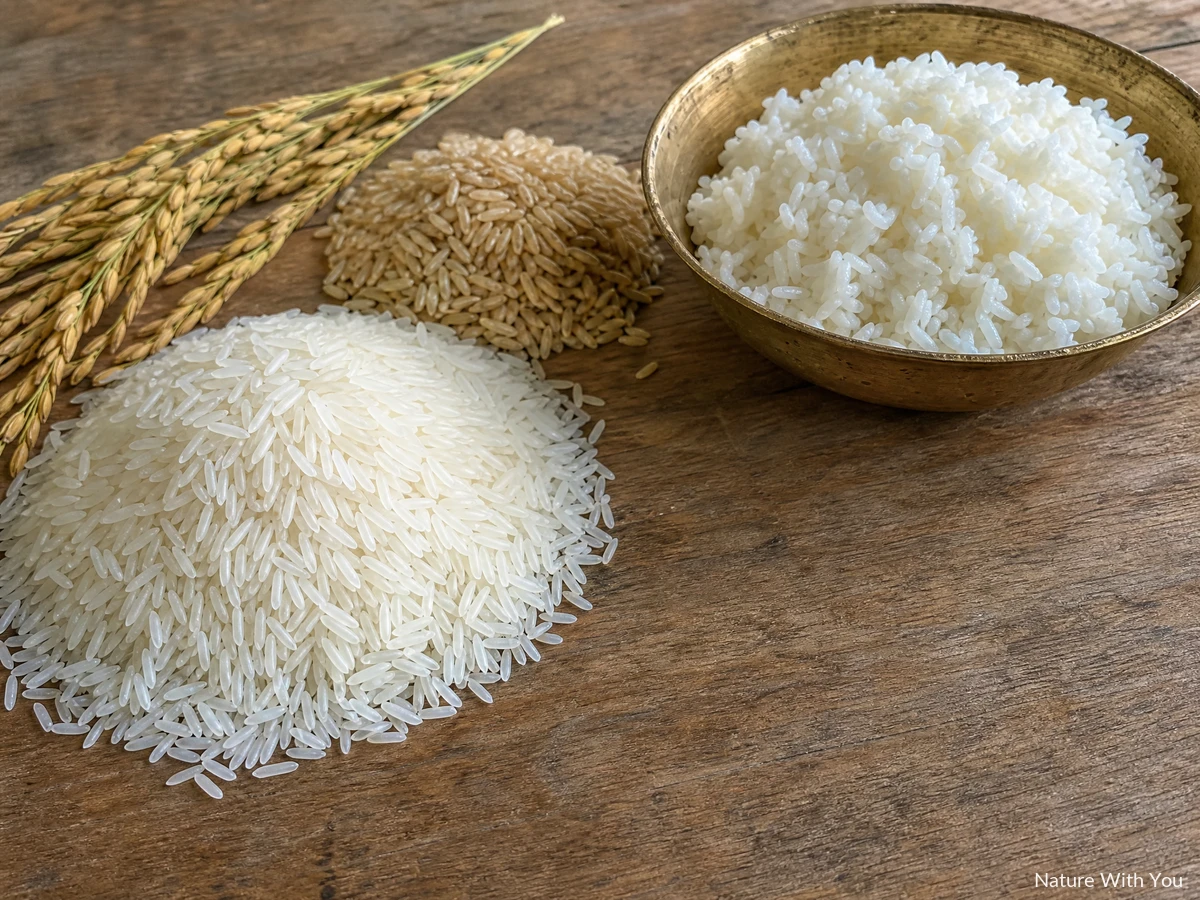
Rice (Chawal) – Ayurvedic Nature, Types & Nutrition
Rice (chawal) in Ayurveda: shali and raktashali, why aged rice is lighter, kanji and peya for recovery, and white vs brown rice nutrition compared.
Mon, Sep 28, 2026 · 5 min read🍚 Rice at a Glance
Rice, or Chawal, is the grain that sits at the centre of the Indian plate from Kashmir to Kerala. It is sweet, cooling and easy on the stomach, which is why it turns up in the gentlest meals a household makes — khichdi for a tired digestion, kanji for someone getting back on their feet, curd rice on a hot afternoon. Ayurveda has thought about rice in unusual detail, ranking varieties, preferring aged grain to new, and building an entire recovery diet out of rice cooked in different amounts of water.
✨ Why It’s Special / Importance
- 🌾 Ranked by Charaka as the foremost of the awned grains (shukadhanya)
- 🍲 The base of khichdi, kanji, peya and pongal — India’s classic light meals
- 🧊 Cooling (sheeta) in nature, welcome in summer and for Pitta
- ⏳ Aged rice is valued above fresh harvest for being lighter to digest
- 🥣 Naturally gluten-free and easy to pair with dal for a complete meal
🏺 Traditional / Ayurvedic Uses
Rasa (Taste): Madhura (Sweet) Virya (Potency): Sheeta (Cool) Vipaka (Post-digestive): Madhura (Sweet) Guna (Qualities): Laghu (light), Snigdha (unctuous) Dosha Effect: Good shali rice balances all three doshas; new or heavy rice tends to increase Kapha
Classical Applications:
- Charaka Samhita, Sutrasthana 27 (Annapanavidhi) describes shali rice as sweet, cooling, light and unctuous, nourishing, and mildly binding to the stool. Raktashali, the red variety, is named the best of them and balances all three doshas
- Shashtika rice — the “sixty-day” rice harvested quickly — is praised in the same chapter as cooling, light, unctuous, steadying and tridosha-balancing
- Purana (aged, about a year old) rice is held to be lighter than freshly harvested grain, which is heavier and more Kapha-forming
- Manda, peya and vilepi — rice cooked in progressively less water — form the classical samsarjana krama, the graded diet that rebuilds digestive fire after fasting or cleansing
💪 Benefits / Health Effects
- ✅ Gentle Digestion: Well-cooked rice is easy on a sensitive stomach and may suit recovery days
- ✅ Steady Energy: Its starch is a ready source of fuel for active days
- ✅ Hydration Support: Kanji and rice water are traditional ways to take fluid and a little nourishment together
- ✅ Cooling Comfort: Its sheeta virya may support Pitta balance in hot weather
- ✅ Complete Protein Pairing: With moong dal or urad dal, rice provides a fuller amino-acid profile
- ✅ Brown and Red Rice: Keep the bran, adding fiber and magnesium
🥗 Nutritional Information (Per 100g, Raw)
Figures below are for raw white long-grain rice (USDA FoodData Central).
| Nutrient | Amount |
|---|---|
| Calories | 365 kcal |
| Carbohydrates | 80 g |
| Fiber | 1.3 g |
| Protein | 7.1 g |
| Fat | 0.7 g |
| Magnesium | 25 mg |
| Potassium | 115 mg |
Note: Raw rice roughly triples in weight when cooked, so 100g of cooked rice carries about a third of these values.
🔄 Quick Comparison: White Rice vs Brown Rice
| Feature | White Rice (raw) | Brown Rice (raw) |
|---|---|---|
| Calories | 365 kcal | 370 kcal |
| Fiber | 1.3 g | 3.5 g |
| Magnesium | 25 mg | 143 mg |
| Digestion | Lighter, quicker | Heavier, needs longer cooking |
| Best For | Kanji, khichdi, recovery days | Everyday meals for a strong agni |
For another staple grain, compare rice with wheat, which is heavier and more nourishing, or with barley, which is drying and lighter still.
🥄 How to Use / Prepare
Culinary Tips:
- 🍲 Khichdi: Rice and moong dal cooked soft with cumin, turmeric and a spoon of ghee
- 🥣 Kanji: Rice simmered in plenty of water, lightly salted, sometimes with dry ginger
- 🍚 Curd Rice: Cooled rice mixed with curd and tempered with mustard seed and curry leaves
- 🌾 Soaking: Rinse and soak rice for 20–30 minutes for even, lighter cooking
Traditional Home Remedies:
- 🧘 After a Fast: Begin with thin manda (the liquid), then peya (thin gruel), then soft rice over successive meals
- 🌿 For Summer Heat: Rice water or kanji with a pinch of rock salt and cumin
⚠️ Precautions / Warnings
- ❗ Freshly harvested rice and large, late-night portions may feel heavy and Kapha-forming
- ❗ Cooked rice left at room temperature for long can spoil; cool and refrigerate leftovers promptly
- ❗ Rice alone is low in fiber and protein — pair it with dal and vegetables
- ⚠️ People with Kapha imbalance or sluggish digestion may prefer smaller portions of aged rice
🎉 Fun Facts / Trivia
- 🌾 India grows thousands of traditional rice varieties, from Kerala’s Navara to Manipur’s black chak-hao
- ⏳ Traders still charge more for “old rice” — the same preference the classical texts express
- 🍚 Shashtika means “sixty”: the rice was named for how quickly it ripens
- 🥣 Pongal in Tamil Nadu is named for rice and milk “boiling over”
Frequently Asked Questions (FAQs)
Q: Is rice hot or cold in Ayurveda? A: Rice is sheeta (cooling). See our guide to hot and cold foods for where it sits among other grains.
Q: Why is old rice considered better than new rice? A: Aged rice loses moisture and is held to be lighter and easier to digest. New rice is heavier and tends to increase Kapha.
Q: Is brown rice always the healthier choice? A: It carries more fiber and magnesium, but it is heavier. For weak digestion or recovery, well-cooked white rice is often the gentler choice.
Q: Which dosha does rice suit? A: Good shali rice balances all three; it is especially welcome for Pitta. Kapha types do better with smaller portions of aged rice.
Related Items
Explore More: Fruits • Vegetables • Herbs • Natural Remedies • Seasonal Picks • Wellness Tips
📚 Sources
- USDA FoodData Central – Rice, white, long-grain, regular, raw, unenriched; Rice, brown, long-grain, raw
- Charaka Samhita, Sutrasthana 27 (Annapanavidhi) — shukadhanya: shali, raktashali and shashtika rice
- Charaka Samhita, Siddhisthana 1 — samsarjana krama, the graded diet of manda, peya and vilepi