

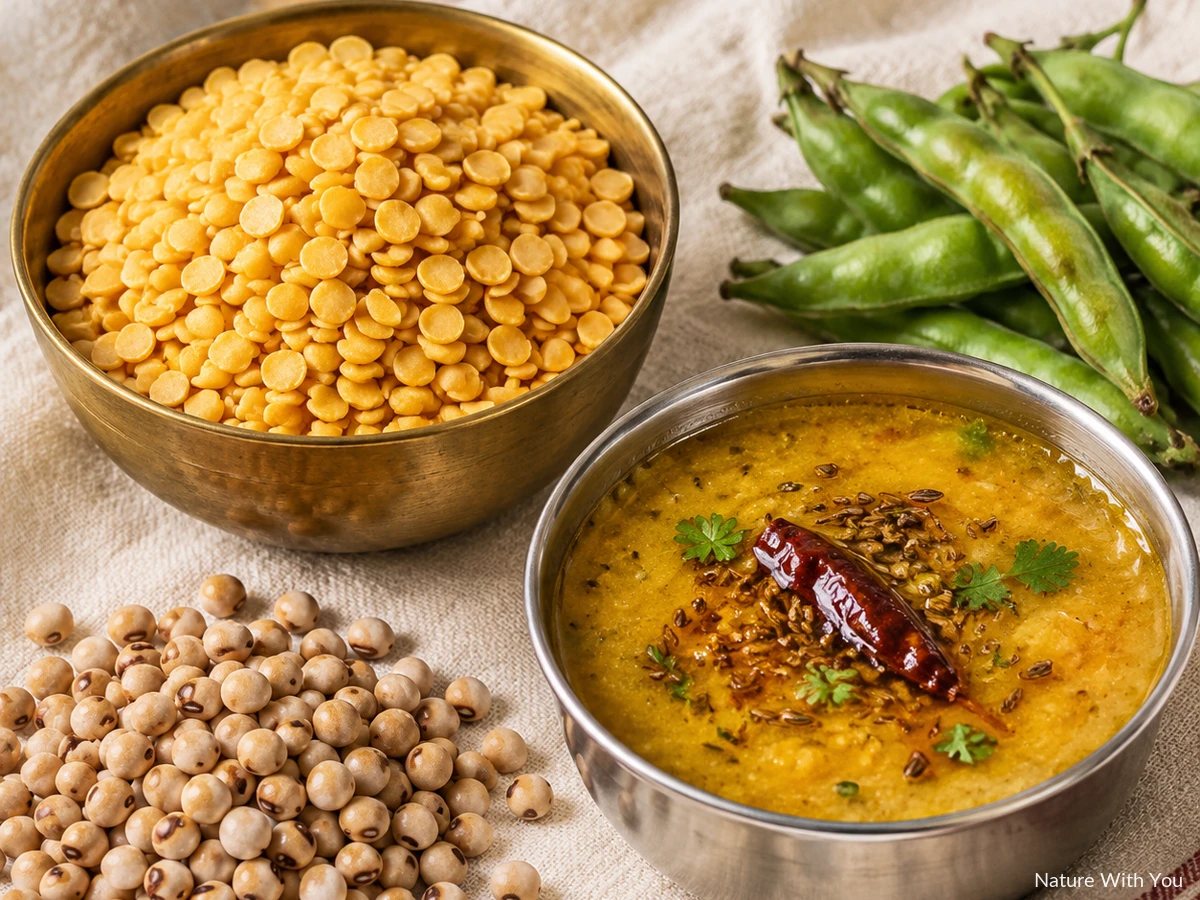
Toor Dal (Arhar) – Ayurvedic Nature, Nutrition & Everyday Uses
Toor Dal (Arhar, pigeon pea) in Ayurveda: astringent-sweet, cooling, light and dry Adhaki that settles Kapha and Pitta. Nutrition per 100g, dal tadka and sambar, and how to keep it light.
Tue, Sep 29, 2026 · 5 min read🫘 Toor Dal at a Glance
If one pot of dal stands for the Indian kitchen, it is probably toor. Called Arhar in UP and Bihar and Tuvar in Gujarat, it is the yellow dal of the daily thali from Ahmedabad to Chennai — sweet-sour Gujarati dal, Maharashtrian varan-bhaat, and the sambar of every South Indian home. Ayurveda names it Adhaki. It is light, cooling and dry, easier to digest than the heavier pulses, and happiest with a generous tadka of ghee, cumin and hing.
✨ Why It’s Special / Importance
- 🍲 The most widely eaten dal in India — dal tadka, varan, sambar, bele saaru
- ❄️ Cooling and light, a pulse that settles Kapha and Pitta
- 💪 A good source of plant protein, with about 22 g per 100 g raw
- 🌿 Among the highest-fibre everyday dals
- 🌱 The plant fixes nitrogen and grows on dry, poor soil — a farmer’s friend in rain-fed India
🏺 Traditional / Ayurvedic Uses
Rasa (Taste): Kashaya–Madhura (Astringent–Sweet) Virya (Potency): Sheeta (Cool) Vipaka (Post-digestive): Katu (Pungent) Guna (Qualities): Laghu (light), Ruksha (dry), Grahi (binding) Dosha Effect: Settles Kapha and Pitta; can increase Vata
Classical Applications:
- Charaka’s Annapanavidhi chapter counts Adhaki among the shamidhanya that are astringent-sweet and wholesome for Kapha and Pitta
- Bhavaprakasha describes Tuvari as dry, sweet, cooling, light and binding, and as varnya — good for the complexion
- It is also listed as Vata-increasing, which is why the classical kitchen never serves it without fat and digestive spices
- Toor dal cooked thin with ghee is a traditional, easily digested meal for recovery from fevers once the appetite returns
💪 Benefits / Health Effects
- ✅ Plant Protein: Pairs with rice or roti to give a complete protein in the classic dal-chawal
- ✅ Fibre: One of the more fibre-rich dals, supporting regular digestion
- ✅ Folate: A rich source, important for everyone and especially during pregnancy
- ✅ Potassium and Magnesium: Mineral-rich with almost no fat
- ✅ Light Pulse: Easier to digest than urad or rajma
- ✅ Steady Energy: Protein and fibre slow the release of its carbohydrates
🥗 Nutritional Information (Per 100g, Raw Pigeon Peas)
| Nutrient | Amount |
|---|---|
| Calories | 343 kcal |
| Carbohydrates | 62.8 g |
| Fiber | 15 g |
| Protein | 21.7 g |
| Fat | 1.5 g |
| Iron | 5.2 mg |
| Magnesium | 183 mg |
| Folate | 456 mcg |
Note: Values are for mature, raw pigeon peas (USDA FoodData Central). Split, hulled toor dal loses some of the seed-coat fibre. Some market toor is polished with oil — rinse it well before cooking.
🔄 Quick Comparison: Toor Dal vs Masoor Dal
| Feature | Toor Dal (Adhaki) | Masoor Dal (Masura) |
|---|---|---|
| Rasa | Astringent, sweet | Sweet, astringent |
| Virya | Cooling | Cooling |
| Guna | Light, dry, binding | Light, dry, binding |
| Dosha | Settles Kapha–Pitta, may raise Vata | Settles Kapha–Pitta, may raise Vata |
| Cooking Time | 25–30 minutes (pressure cooker) | 15–20 minutes, no soaking |
| Typical Use | Dal tadka, sambar, varan | Weeknight dal, musur dal, ubtan |
🥄 How to Use / Prepare
Culinary Tips:
- 🍲 Dal tadka: Pressure-cook with turmeric, then temper with cumin, garlic, dried red chilli and a pinch of hing in ghee
- 🥘 Sambar: Toor cooked with tamarind, sambar powder and vegetables like drumstick and pumpkin
- 🍋 Gujarati dal: Thin, sweet-sour with jaggery and kokum or lemon
- ⏲️ Soak 30 minutes: A short soak shortens cooking and makes it easier to digest
Traditional Home Practices:
- 🌿 Against gas: Hing, ginger and cumin in the tadka are the classical correctives for its Vata-raising nature
- 🍚 Dal-chawal with ghee: A spoon of ghee on toor dal and rice is the simplest balanced meal in the Indian kitchen
⚠️ Precautions / Warnings
- ❗ Dry and Vata-raising — eaten thick or without fat, it can cause gas and bloating
- ❗ Oil-polished toor should be rinsed several times before cooking
- ❗ Toor is relatively high in purines; those advised to limit them should keep portions moderate
- ⚠️ Check for khesari adulteration in loose, unbranded dal — buy from a trusted source
🎉 Fun Facts / Trivia
- 🇮🇳 India grows and eats most of the world’s pigeon peas
- 🌳 The toor plant is a shrub that can live for several years, unlike most pulse crops
- 🟢 Fresh green toor (lilva) is a winter delicacy in Gujarat, cooked in lilva kachori and undhiyu
- 🗺️ It reached the Caribbean and Africa from India, where it is still called “pigeon pea” or “gandule”
Frequently Asked Questions (FAQs)
Q: Is toor dal hot or cold in Ayurveda? A: Cold. Classical texts describe Adhaki as sheeta — cooling, light and dry.
Q: Is toor dal hard to digest? A: It is lighter than urad or rajma, but its dryness can cause gas. Soaking, cooking it soft, and adding hing, ginger and ghee help a lot.
Q: Toor dal or moong dal — which is better daily? A: Both are light and cooling. Moong is gentler and preferred when digestion is weak; toor has more fibre and fills more. Most homes rotate them.
Q: Why is toor dal sometimes oily? A: Some traders coat it with oil to improve shine and shelf life. Rinse it in warm water until the water runs clear.
Related Items
- Masoor Dal (Red Lentil)
- Moong Dal – the lightest pulse
- Urad Dal – heavy and warming
- Rice
- Hing (Asafoetida)
Explore More: Grains, Pulses & Dairy • Vegetables • Herbs • Seasonal Picks
📚 Sources
- USDA FoodData Central – Pigeon peas (red gram), mature seeds, raw
- Charaka Samhita, Sutrasthana 27 (Annapanavidhi Adhyaya) – Shamidhanya varga
- Bhavaprakasha Nighantu – Dhanya varga (Adhaki / Tuvari)
- ICAR – Indian Institute of Pulses Research, pigeon pea crop profile