

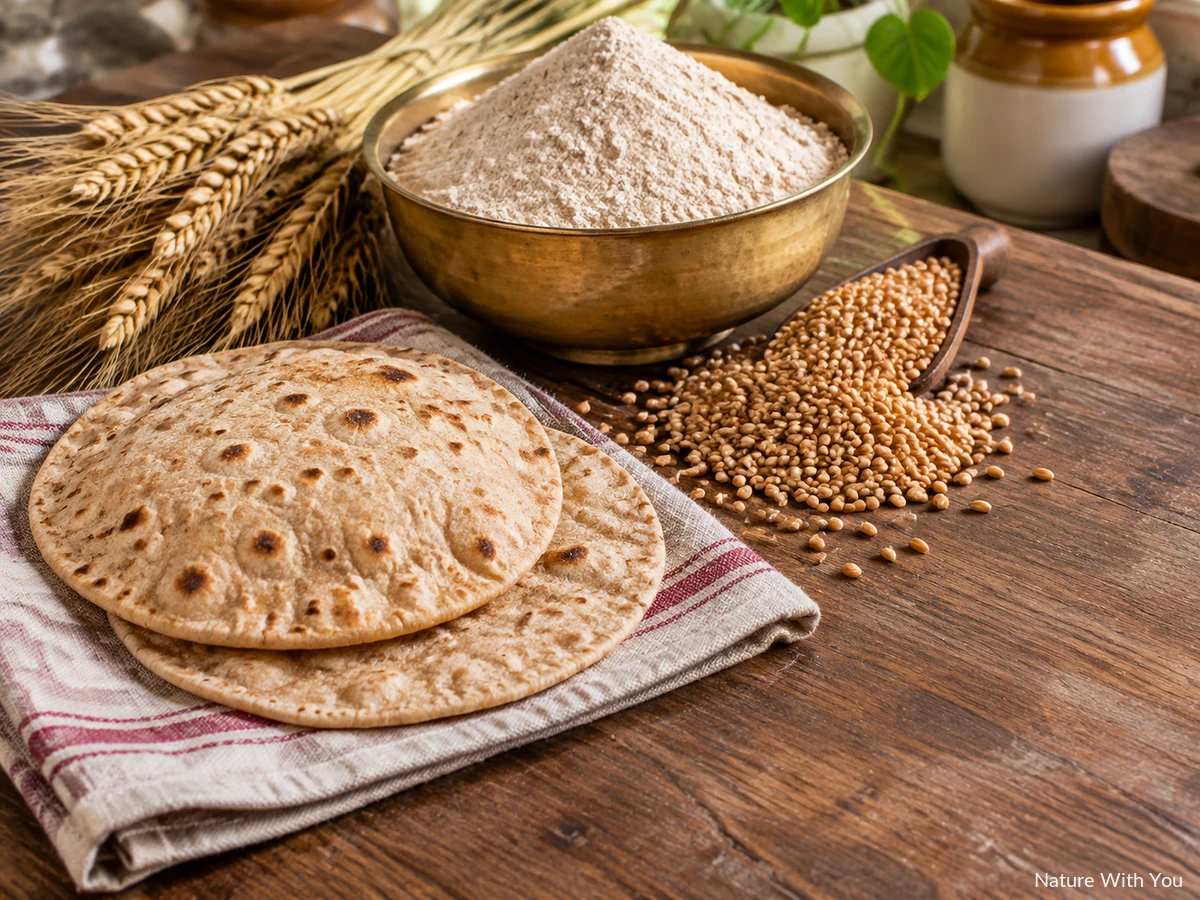
Wheat (Gehun) – Ayurvedic Nature, Nutrition & Uses
Wheat (Gehun) in Ayurveda: sweet, cooling, heavy and nourishing Godhuma. Whole-wheat nutrition, roti, dalia and thooli, and who should go easy on it.
Mon, Sep 28, 2026 · 5 min read🌾 Wheat at a Glance
Wheat, or Gehun, is the grain behind the everyday roti across most of North and Central India. Ayurveda knows it as Godhuma and places it among the most nourishing, strength-building grains in the diet. It is sweet, cooling, heavy and unctuous — a food that fills, steadies and sustains. Eaten as whole-wheat atta, it also brings a good share of fibre, protein and minerals to the plate, which is why the humble phulka has fed families for generations.
✨ Why It’s Special / Importance
- 🍞 The staple grain of the Indian wheat belt — roti, paratha, puri, dalia and halwa all start here
- 💪 Classically described as balya (strength-giving) and brimhana (building)
- 🌿 Cooling and unctuous, so it suits Vata and Pitta constitutions well
- 🥣 Whole-wheat flour keeps the bran and germ, adding fibre, iron and magnesium
- 🏡 Endlessly adaptable — sweet or savoury, festive or plain, for the young and the old
🏺 Traditional / Ayurvedic Uses
Rasa (Taste): Madhura (Sweet) Virya (Potency): Sheeta (Cool) Vipaka (Post-digestive): Madhura (Sweet) Guna (Qualities): Guru (heavy), Snigdha (unctuous), Sthira (stabilising) Dosha Effect: Pacifies Vata and Pitta; increases Kapha when eaten in excess
Classical Applications:
- Charaka’s Annapanavidhi chapter lists Godhuma in the Shukadhanya (awned grains) group and calls it sandhanakara — a grain that helps tissues join and heal — along with jivana (life-sustaining), brimhana and vrishya (nourishing to vitality)
- Its heavy, steadying nature made it a classical food for convalescence, the elderly and the lean
- Bhavaprakasha adds that it is sara — it keeps the bowels moving
- Old wheat, stored for a season, is considered lighter to digest than freshly harvested grain
💪 Benefits / Health Effects
- ✅ Strength and Stamina: Complex carbohydrates and protein supply steady, sustained energy for physical work
- ✅ Digestion: The bran in whole-wheat atta supports regular bowel movements
- ✅ Minerals: Whole wheat contributes iron, magnesium and phosphorus to a vegetarian diet
- ✅ Satiety: Its heavy, filling nature keeps hunger at bay between meals
- ✅ Tissue Nourishment: Traditionally favoured during recovery and for building body mass
- ✅ Cooling Balance: A calming staple in hot weather and for Pitta-dominant people
🥗 Nutritional Information (Per 100g, Whole-Wheat Flour)
| Nutrient | Amount |
|---|---|
| Calories | 340 kcal |
| Carbohydrates | 72 g |
| Fiber | 10.7 g |
| Protein | 13.2 g |
| Fat | 2.5 g |
| Iron | 3.6 mg |
| Magnesium | 137 mg |
| Potassium | 363 mg |
Note: Values are for whole-grain wheat flour (USDA FoodData Central). Refined flour (maida) loses most of the bran and germ, and with them much of the fibre and minerals — whole atta keeps them.
🔄 Quick Comparison: Wheat vs Barley – The Two Classical Grains
| Feature | Wheat (Gehun / Godhuma) | Barley (Jau / Yava) |
|---|---|---|
| Rasa | Sweet | Sweet–astringent |
| Virya | Cooling | Cooling |
| Guna | Heavy, unctuous | Light, dry |
| Dosha | Calms Vata–Pitta, adds Kapha | Calms Kapha–Pitta, may raise Vata |
| Classical Role | Building, brimhana | Scraping, lekhana |
| Typical Use | Roti, paratha, dalia, halwa | Sattu, jau ka pani, mixed-flour roti |
🥄 How to Use / Prepare
Culinary Tips:
- 🫓 Phulka / Roti: Knead whole atta with water and rest it for 20 minutes for softer rotis
- 🥣 Dalia: Cracked wheat cooked with moong dal and vegetables makes a light, one-pot khichdi
- 🍮 Thooli / Lapsi: Broken wheat roasted in ghee and sweetened with jaggery — a Rajasthani and Gujarati festive dish
- 🌾 Mixed-Grain Atta: Blend wheat with barley, bajra or chana flour to lighten it
Traditional Home Practices:
- 🧈 For the Lean and Recovering: Wheat porridge cooked in milk with a spoon of desi ghee is a classic building food
- 🔥 For Easier Digestion: Roast dalia dry before cooking, and pair heavy wheat dishes with ginger or ajwain
⚠️ Precautions / Warnings
- ❗ Wheat contains gluten; people with coeliac disease or a gluten sensitivity need to avoid it
- ❗ Being heavy and Kapha-increasing, large helpings can feel sluggish for those with slow digestion
- ❗ Maida-based foods are far heavier and poorer in fibre than whole atta
- ⚠️ Kapha-dominant people may do better rotating wheat with lighter grains like barley or millet
🎉 Fun Facts / Trivia
- 🌾 Wheat was among the grains found at Harappan sites, cultivated on the subcontinent for thousands of years
- 🏺 The Sanskrit Godhuma is the root of the everyday Hindi word Gehun
- 🫓 A single wheat grain has three parts — bran, germ and endosperm; maida is almost entirely endosperm
- 🌞 Rabi wheat is sown after the monsoon and harvested around Baisakhi in spring
Frequently Asked Questions (FAQs)
Q: Is wheat heating or cooling in Ayurveda? A: Cooling. Classical texts give Godhuma a sheeta virya, which is why it suits Pitta. Its heaviness, not its heat, is what to watch.
Q: Is whole-wheat atta better than maida? A: Nutritionally, yes. Whole atta keeps the bran and germ, so it carries several times more fibre and noticeably more iron and magnesium than refined flour.
Q: Which dosha should limit wheat? A: Kapha. Wheat is heavy and unctuous, and in excess it adds to Kapha. Mixing in barley or millet flour, and preferring old wheat, lightens it.
Q: Is dalia lighter than roti? A: Dalia cooked soft with vegetables or moong dal is generally easier on digestion than thick rotis, especially at dinner.
Related Items
- Barley (Jau) – the lighter, drying grain
- Bajra – the winter millet
- Rice
- Hot and Cold Foods in Ayurveda
- Ayurveda Dosha Food Guide
Explore More: Grains, Pulses & Dairy • Vegetables • Herbs • Seasonal Picks
📚 Sources
- USDA FoodData Central – Wheat flour, whole-grain
- Charaka Samhita, Sutrasthana 27 (Annapanavidhi Adhyaya) – Shukadhanya varga
- Ashtanga Hridaya, Sutrasthana 6 (Annasvarupa Vijnaniya)
- Bhavaprakasha Nighantu – Dhanya varga