

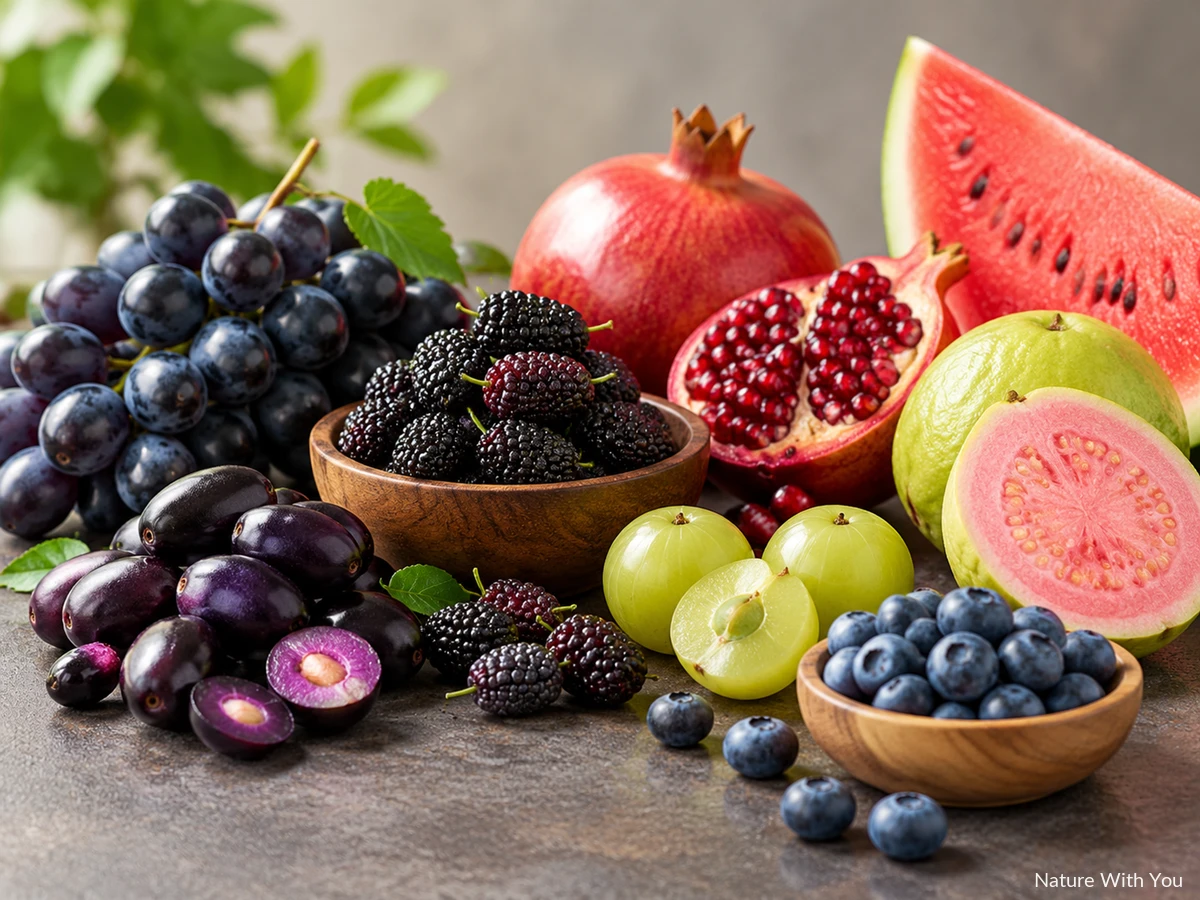
Antioxidant-Rich Fruits – What Antioxidants Are & Best Picks
What antioxidants are, what oxidative stress means, and which fruits carry the most — jamun, amla, pomegranate, guava and more, by colour and taste.
Mon, Sep 28, 2026 · 6 min readWhat Antioxidants Are, in Plain Words
Every cell in the body burns fuel, and like any fire it throws off sparks. Those sparks are free radicals — unstable molecules missing an electron, which they try to take from whatever is nearby: a fat in a cell wall, a protein, a strand of DNA. An antioxidant is a molecule that can give up an electron without becoming dangerous itself, so the chain reaction stops there.
The body makes its own antioxidant defences, and food adds to them. When free-radical production outruns those defences for long stretches — through smoke, heavy pollution, too much sun, poor sleep or a diet short on plants — the imbalance is called oxidative stress. It has been studied in relation to ageing and many long-term conditions, though it is one factor among many, and eating antioxidants is not the same as being protected from any disease.
What the research does support is simple: diets rich in whole fruit and vegetables are consistently associated with better health. Fruit happens to be one of the richest and most enjoyable sources of antioxidants there is.
The Ayurvedic Lens: Rasayana Fruits
Ayurveda did not speak of free radicals, but it had a clear category for foods that preserve the body’s vigour: rasayana, the rejuvenative branch of the tradition.
- Amla (Amalaki) — the Charaka Samhita names amalaki foremost among substances that sustain youthfulness (vayahsthapana), and it is the base of Chyawanprash. Five of the six tastes live in it, sour leading.
- Pomegranate (Dadima) — the sweet variety is one of the few fruits counted as balancing all three doshas, and Charaka lists dadima in the hridya group, the foods that gladden the heart.
- Grapes (Draksha) — ranked among the finest of fruits in the classical lists: sweet, cooling, nourishing and satisfying to thirst.
- Jamun (Jambu) — astringent, cooling, and a monsoon fruit Ayurveda values for pacifying Kapha and Pitta.
Modern analysis finds that these same fruits are unusually rich in polyphenols and vitamin C — a separate line of evidence arriving at a similar shortlist.
Antioxidant Types and the Fruits Richest in Them
Colour and taste are reliable clues. Deep purple and blue signal anthocyanins; orange and red flesh signals carotenoids; a dry, puckering astringency signals tannins.
| Antioxidant type | What gives it away | Fruits rich in it |
|---|---|---|
| Vitamin C | Sharp, sour taste | Amla, Guava, Kiwi, Papaya, Strawberry, Orange |
| Anthocyanins | Deep purple, blue or dark red skin that stains | Jamun, Mulberry, Blueberry, Cherry, black Grapes |
| Flavonoids (quercetin, catechins, hesperidin) | Often concentrated in the peel and pith | Apple with skin, grapes, citrus pith |
| Carotenoids (beta-carotene, lycopene) | Orange, yellow or red flesh | Mango, papaya, Apricot, pink guava, Watermelon |
| Polyphenols and tannins (punicalagins, ellagic and gallic acid) | Astringent, mouth-drying taste | Pomegranate, amla, jamun, Raspberry |
There is a neat overlap here with Ayurveda: the astringent taste, kashaya rasa, is largely the taste of tannins. The fruits the tradition prized for astringency are the ones that turn out to be dense in polyphenols.
Which Fruit Has the Most Antioxidants?
There is no single winner, and any chart that crowns one is measuring one thing. Rankings shift with the test used, the variety, ripeness and whether the skin is counted. What holds up across measures is a group of consistently high performers:
- Dark berries and purple fruit — jamun, black mulberry, blueberry and black grapes lead on anthocyanins. Among the berries these are the usual answer to “which fruit has the most anthocyanins”, with deeper colour generally meaning more.
- Amla — among the richest natural sources of vitamin C, along with gallic and ellagic acid. In India it is the fruit most often called the king of antioxidants, and the classical texts would agree on its standing.
- Pomegranate — its punicalagins are a polyphenol found almost only in this fruit, concentrated in the membranes and rind.
- Guava — USDA data puts it at about 228 mg of vitamin C per 100 g, well ahead of an orange at about 53 mg; the pink kind adds lycopene.
On watermelon antioxidants: its red flesh is one of the richest dietary sources of lycopene, the carotenoid behind its colour, alongside some vitamin C.
The practical answer is variety. Eating across colours brings in different antioxidant families, which no single fruit can do.
Seasonal Indian Picks
- Monsoon (June–August): jamun, the purple fruit of the rainy season
- Autumn into winter (October–February): amla, pomegranate, guava, oranges — the winter basket is the antioxidant peak of the Indian year
- Spring and summer: mulberry (shahtoot), mango, grapes from Nashik, watermelon
Seasonal fruit is eaten sooner after picking, which matters because vitamin C in particular fades in storage.
How to Eat Them for the Most Benefit
- Whole fruit over juice. Juicing strips fibre and exposes the juice to air; much of the polyphenol content also sits in skins and membranes that get strained off.
- Keep the skin where it is edible. Apple, grape, guava and jamun skins carry much of their flavonoids and anthocyanins.
- Cut close to eating. Vitamin C breaks down with air, light and heat, so a fruit bowl sliced hours ahead has already lost some.
- Mind cooking losses. Heat destroys vitamin C, which is why amla murabba and chutney keep less of it than a raw amla — though they still keep the tannins. Eat some fruit raw every day.
- Eat across colours. A purple, an orange and a sour fruit in a week covers most of the table above.
This site’s focus is whole fruit rather than antioxidant pills; isolated high-dose supplements have not reliably shown the benefits associated with fruit-rich diets.
Precautions
- Amla and unripe guava are strongly astringent and can be constipating in excess — Ayurveda would note they dry Vata.
- Jamun on an empty stomach or in large amounts can unsettle digestion; avoid milk straight after it.
- Mango, grapes and sapota are sweet and heavy (madhura, guru); for a Kapha constitution or anyone keeping sugar low, a small bowl is enough.
- Very sour fruit on an empty stomach may aggravate acidity in Pitta-prone people.
FAQs
Q: What do antioxidants actually do? A: They donate an electron to a free radical, stopping it from damaging cells. The body uses them alongside its own internal defences.
Q: Is blueberry the best antioxidant fruit? A: Blueberry is excellent for anthocyanins, but jamun and black mulberry belong in the same group and are far easier to find fresh in India.
Q: Which foods are highest in flavonoids? A: Among fruits, apples eaten with the skin, grapes, citrus, berries and cherries. Tea, onions and many herbs are strong sources outside the fruit bowl.
Q: Do dried fruits keep their antioxidants? A: Many polyphenols survive drying well, and raisins keep much of what grapes carry. Vitamin C is largely lost.
Related Reading
Explore More: Fruits • Vegetables • Herbs • Natural Remedies • Seasonal Picks • Wellness Tips
📚 Sources
- USDA FoodData Central – Vitamin C and lycopene values for guava, orange, kiwi, papaya, strawberry and watermelon (raw, per 100 g)
- Charaka Samhita, Sutrasthana 4 and 25 – Dadima in the hridya group; amalaki named foremost among vayahsthapana substances; Chikitsasthana 1 on rasayana
- Bhavaprakasha Nighantu, Amradi Phala Varga – Draksha, Dadima and Jambu, including rasa, virya and dosha effects
- National Institutes of Health, Office of Dietary Supplements – Antioxidants and vitamin C fact sheets